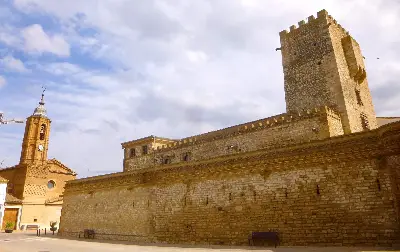
When & Where: On September 29, in the Diputacion square of Cortes.
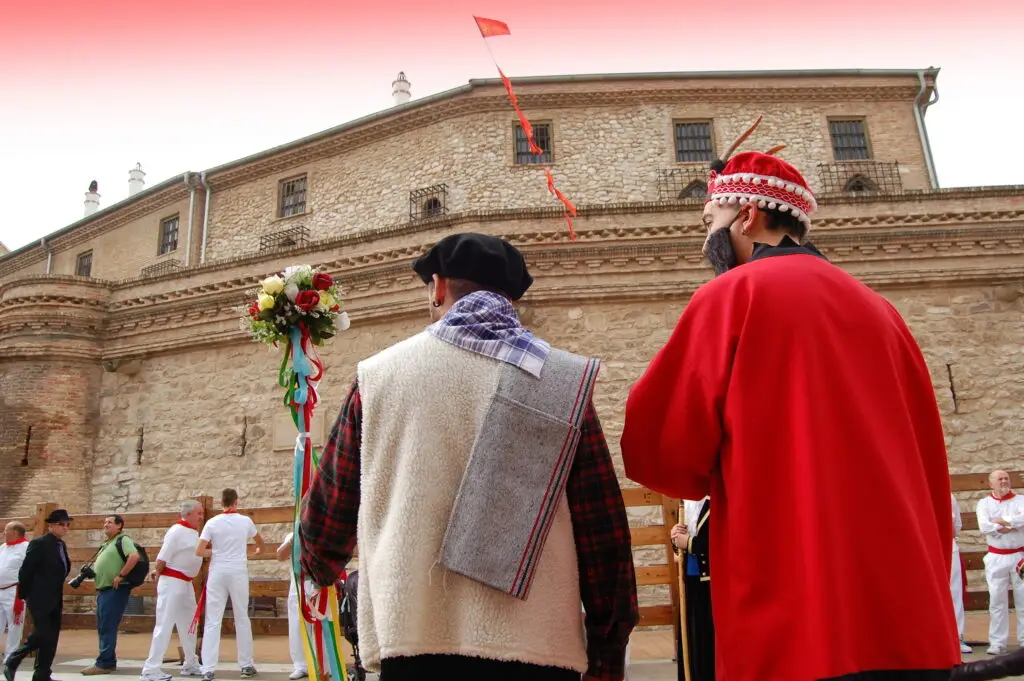
The Paloteado de Cortes is a highly significant annual cultural event held each year on 29 September in the town of Cortes (Navarra). This event blends religious and profane elements, incorporating elaborate stick-dances, dramatic pastoral scenes, and local ritual theatre. It is connected to the river-Ebro dance traditions and shares close affinities with other Basque and Aragonese folk dances.
The event unfolds in two principal parts: a dramatised segment and a choreographed dance section. The dramatized portion includes:
- The pastoradal—a versified dialogue between the mayoral (foreman) and the rabadán (sheep-speaker) believed to originate in the 16th century.
- The interlude (entremés)—a comic exchange involving the mayoral, the rabadán and the devil.
- The auto of Saint Michael the Archangel—a dramatization of the struggle between good (St Michael) and evil (the devil), reflecting theatre traditions of the 15th-16th centuries.
- The dichos—satirical verses composed for the occasion, reflecting current social themes and commentary.
Following the theatrical part, the dance component takes place and is arguably the most widely recognised aspect of the event. It features two dance types of ribbons and two of sticks, alongside elements called cortesías and paseo, performed simultaneously by groups of male and female dancers.
Although traditionally the event was exclusively male-performed (with the exception of a young female angel character), women began participating actively in the mid-20th century, and in 2013 a woman first assumed the role of mayoral—an important milestone in the living tradition.
Declared a Bien de Interés Cultural (Intangible Cultural Heritage) in Spain, the Paloteado de Cortes stands as a potent symbol of regional identity, dance heritage, and community ritual.
Posted on May 29, 2026