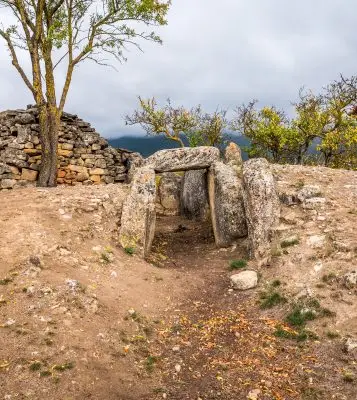
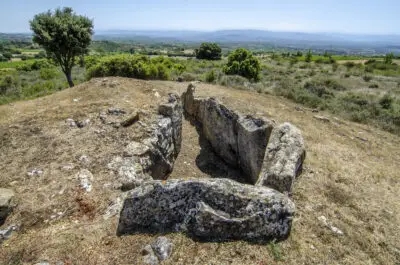
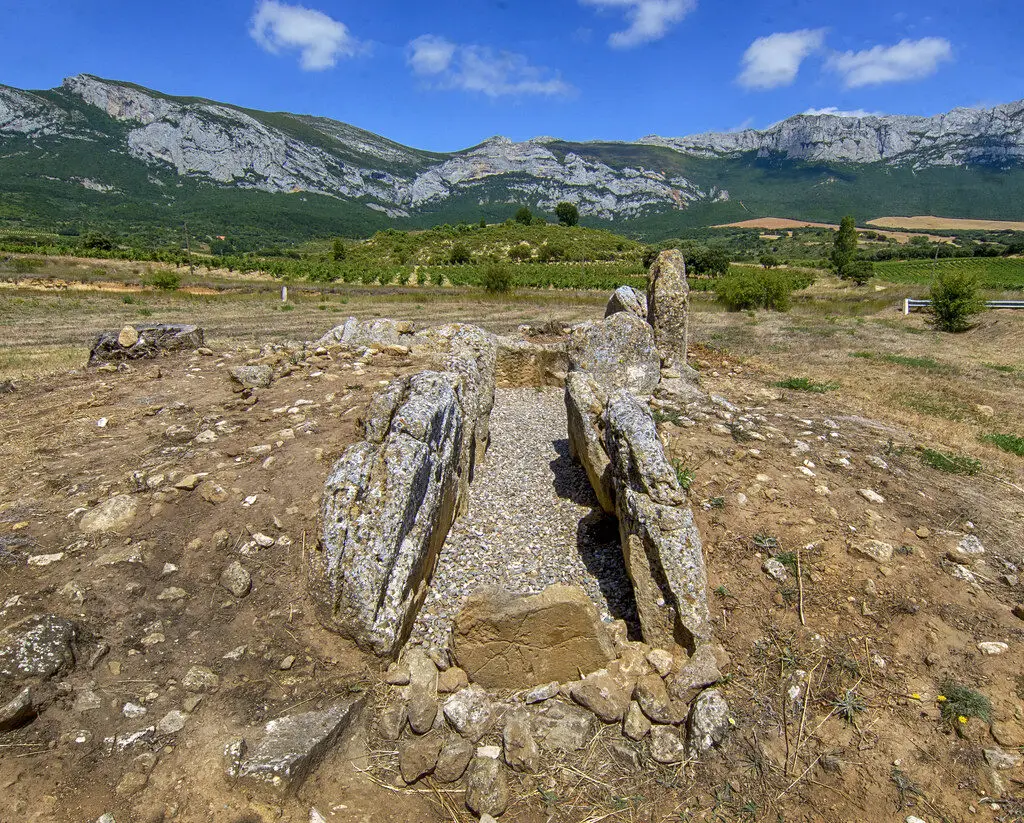
The Dolmen El Sotillo is one of the most important prehistoric monuments in Laguardia, located in the Rioja Alavesa region of Araba, Basque Country. Surrounded today by vineyards and agricultural land, this megalithic burial structure provides valuable insight into the early communities that inhabited the Ebro valley thousands of years before the development of the medieval towns for which Rioja Alavesa is now known.
Dating to the Late Neolithic and Chalcolithic periods, approximately between 3000 and 2500 BC, the monument formed part of a broader prehistoric funerary tradition that spread across northern Iberia. Like other dolmens in the Basque Country, El Sotillo functioned as a collective burial site used over generations by early farming communities.
Structure and Archaeological Discoveries
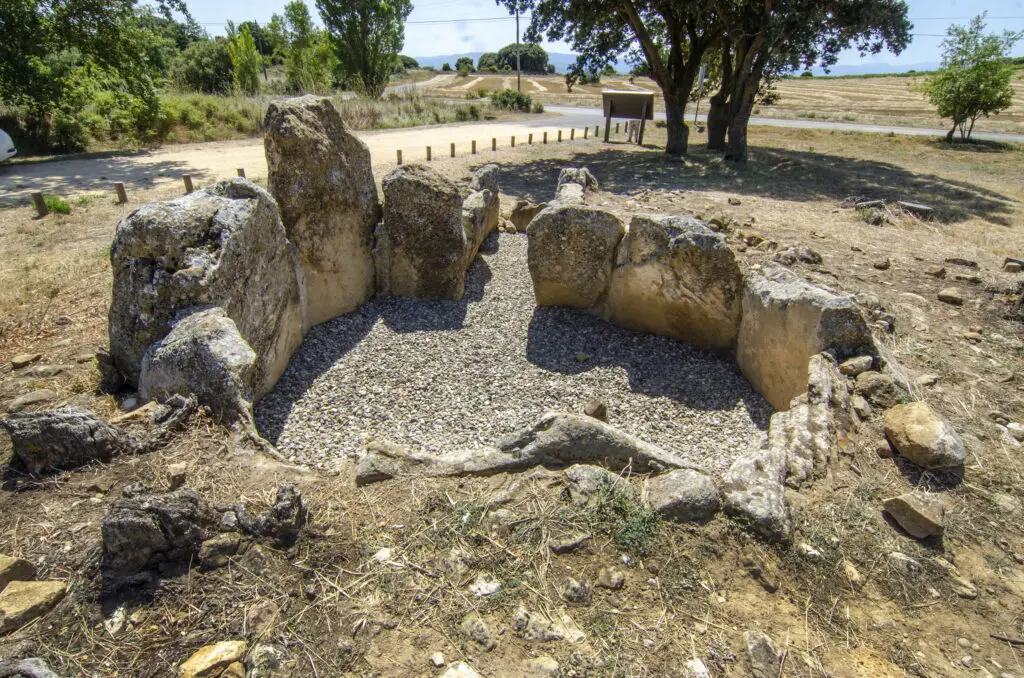
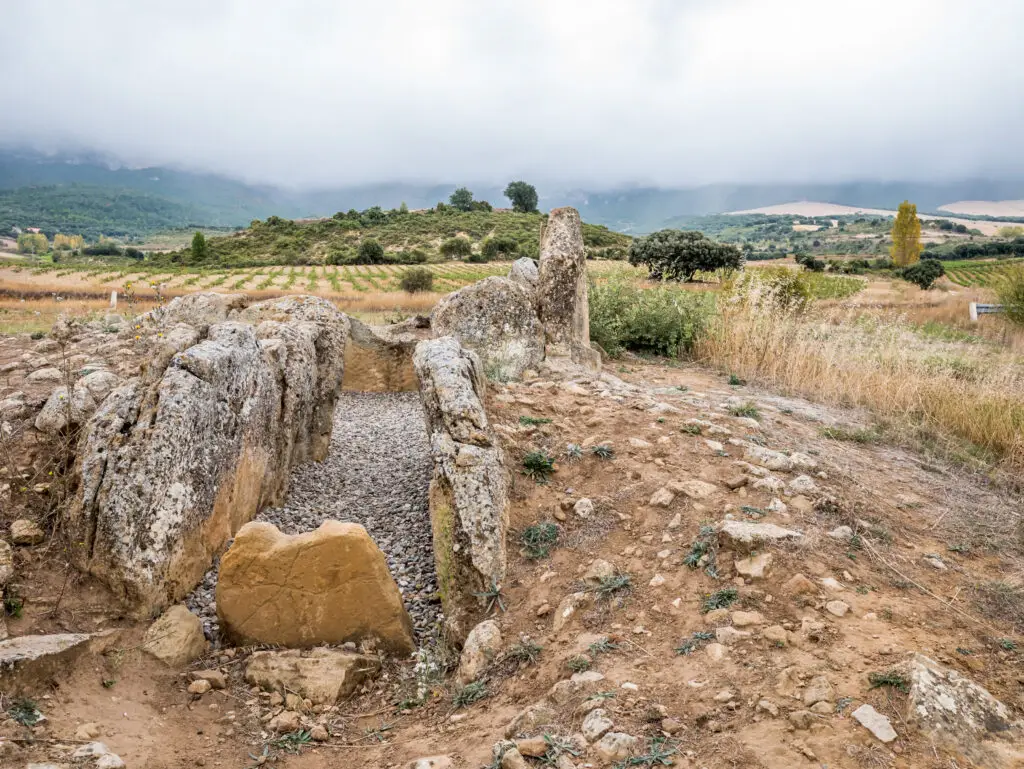
Before archaeological excavations began, only 6 of the 13 stone slabs forming the structure were visible. Several stones had been intentionally reduced in height, while others were scattered around the site. Archaeologists believe that at some point in history, the monument may have been deliberately altered or partially dismantled to render it unusable.
Excavations uncovered a significant collection of prehistoric artifacts, demonstrating that the site remained in use during different historical periods. Findings included:
- Bell Beaker pottery from the Chalcolithic period
- Flint tools from the Neolithic
- Metal awls and arrowheads
- Archer’s wrist guards
Surprisingly, DNA studies conducted by Harvard University, showed that one of the individuals buried at El Sotillo carried a haplogroup linked to the Yamnaya people, a semi-nomadic population originating from the Caspian-Caucasus region. This evidence suggests that descendants of these ancient steppe populations reached and lived in Rioja Alavesa thousands of years ago.
Practical Information for Visitors
The dolmen is easily accessible from the A-124 road between Laguardia and Samaniego and can be visited as part of a route through the prehistoric heritage of Rioja Alavesa. Informational panels on-site provide archaeological context, while the surrounding landscape offers panoramic views of vineyards and the Sierra de Cantabria mountains.
Updated on May 15, 2026