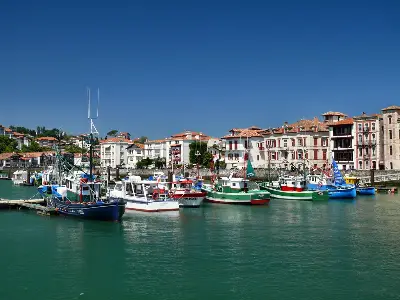
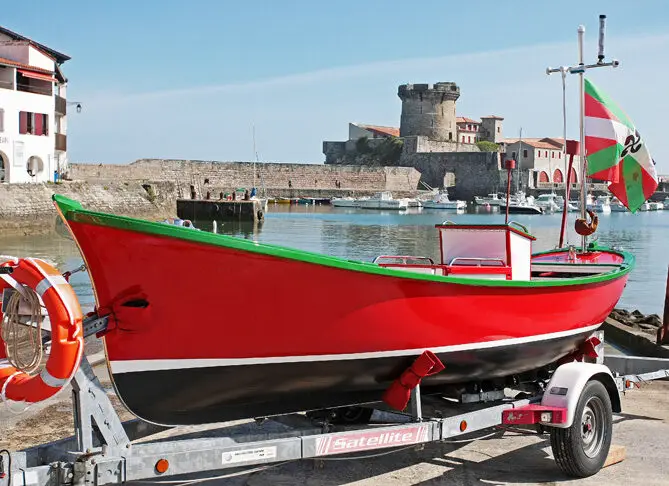
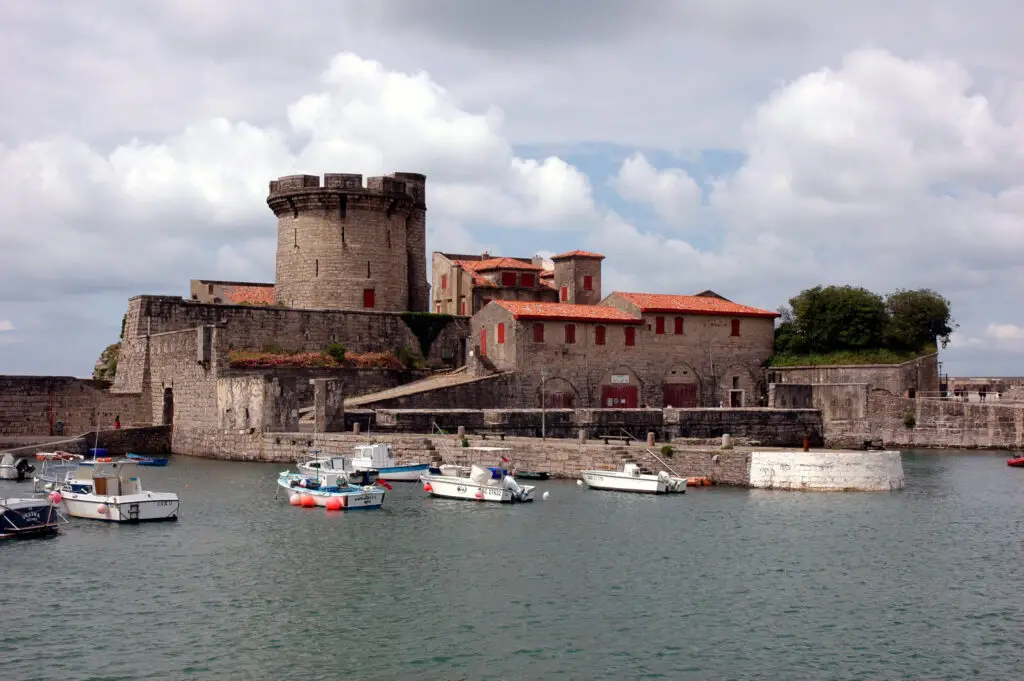
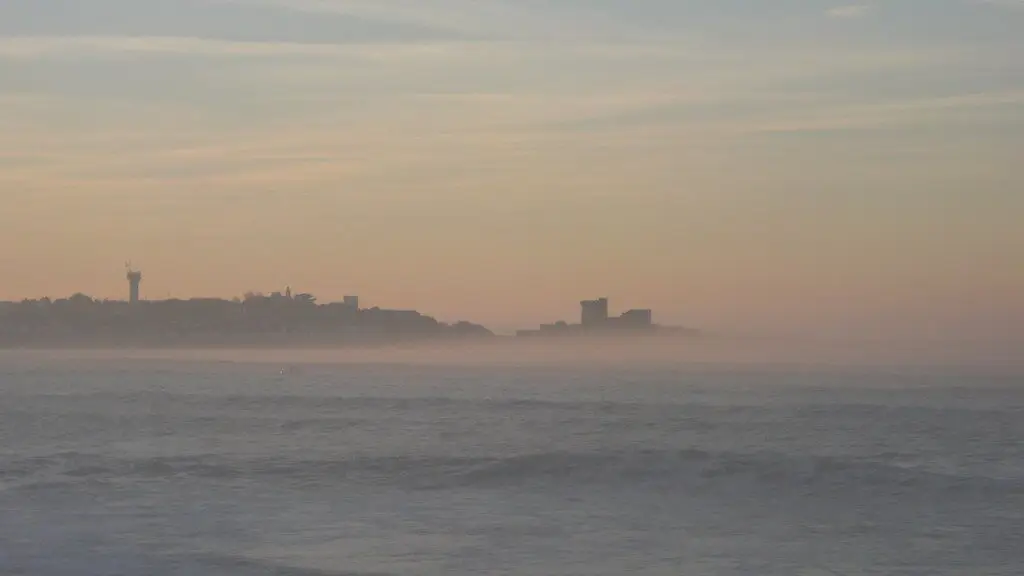
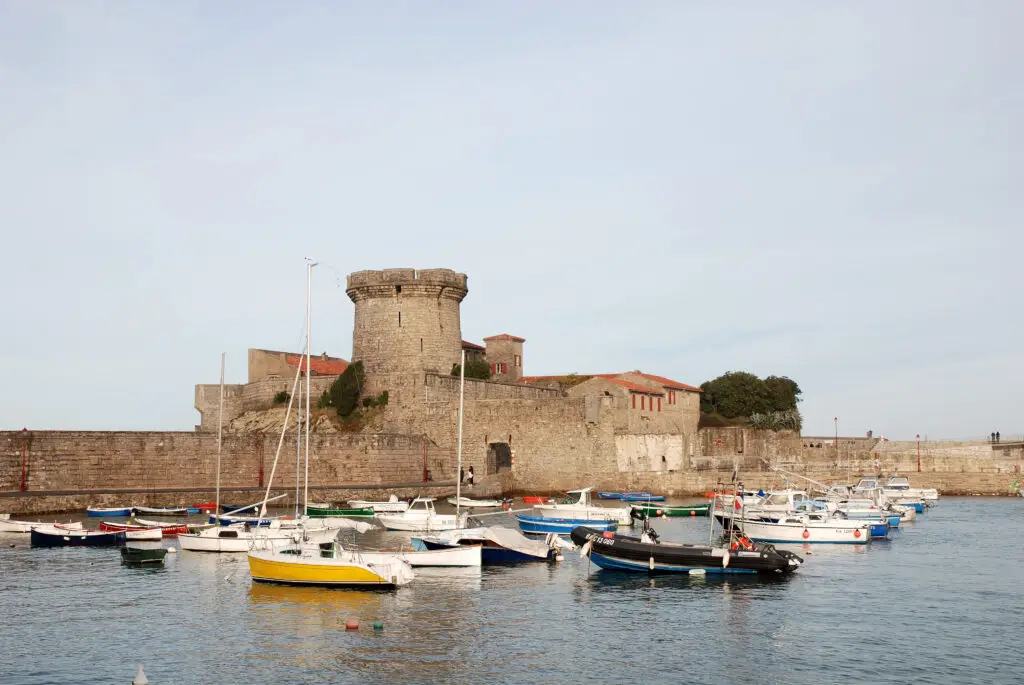
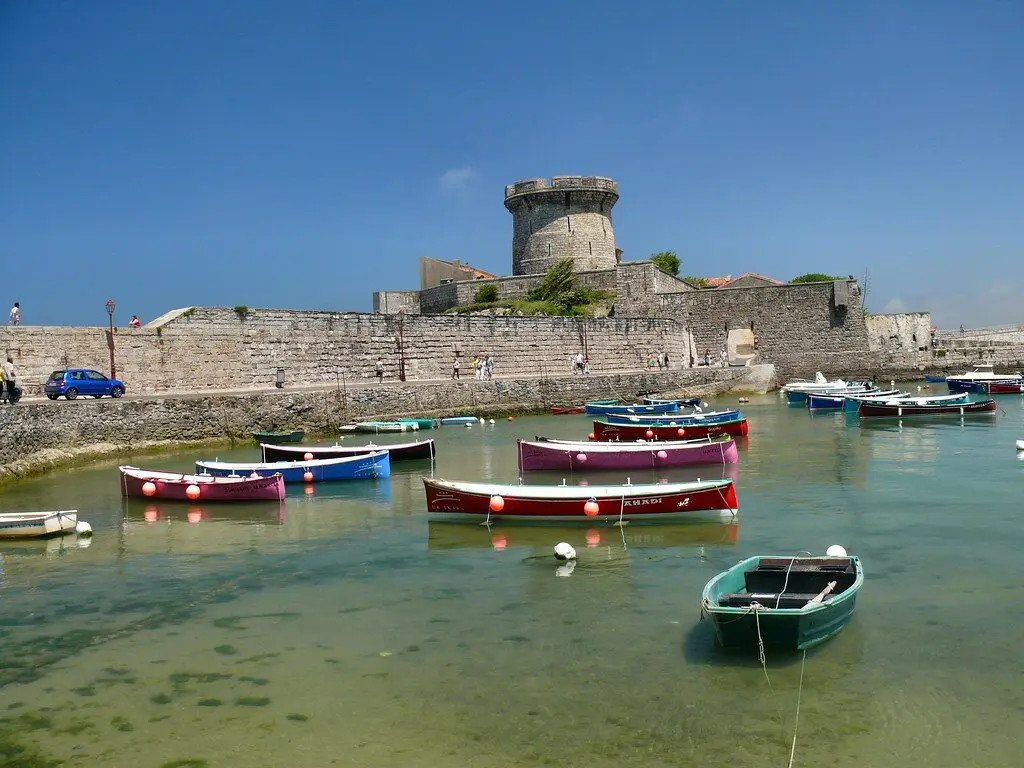
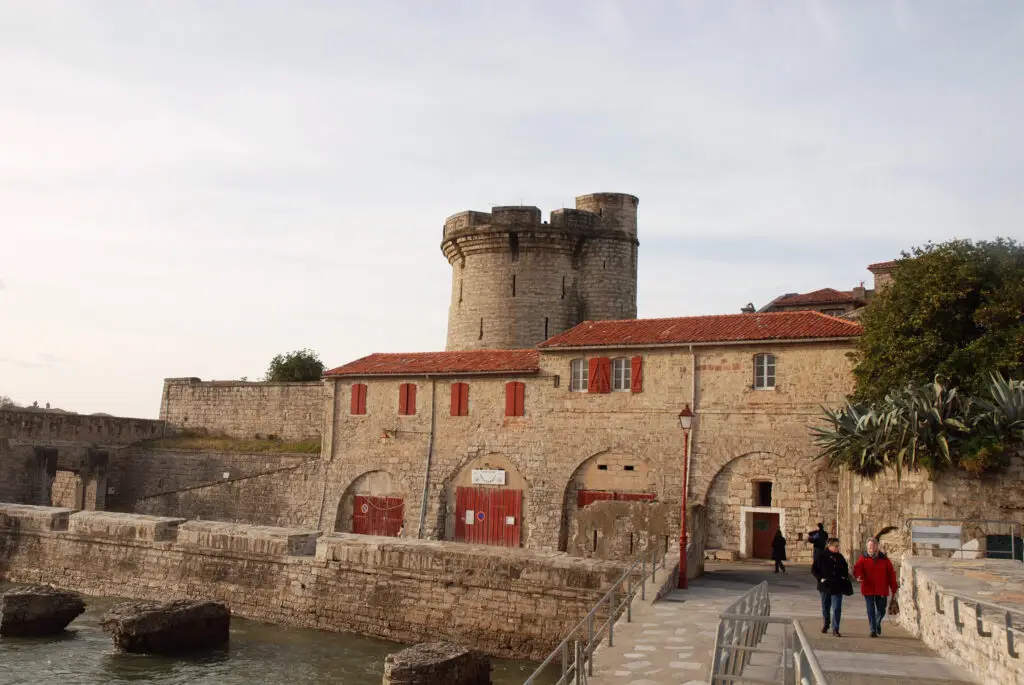
Fort of Socoa or Zokoko gotorlekua is one of the most recognizable coastal fortifications in the French Basque Country. Located in Ciboure, near Saint-Jean-de-Luz, the fort was built to protect the bay and surrounding ports from maritime attacks. Its strategic position at the entrance of the harbor made it an essential defensive structure for controlling navigation and safeguarding the Basque coastline.
The origins of the fort date back to the early seventeenth century. In 1609, under the orders of King Henry IV of France, Jean d’Espagnet, president of the Bordeaux Parliament, arrived in Labourd accompanied by Pierre de Lancre. Their mission included studying the coastline around Hendaye and Socoa with the objective of strengthening French control over the frontier and protecting Saint-Jean-de-Luz and Ciboure from attacks by the Spanish fleet.
Vauban and the Military Development of Socoa
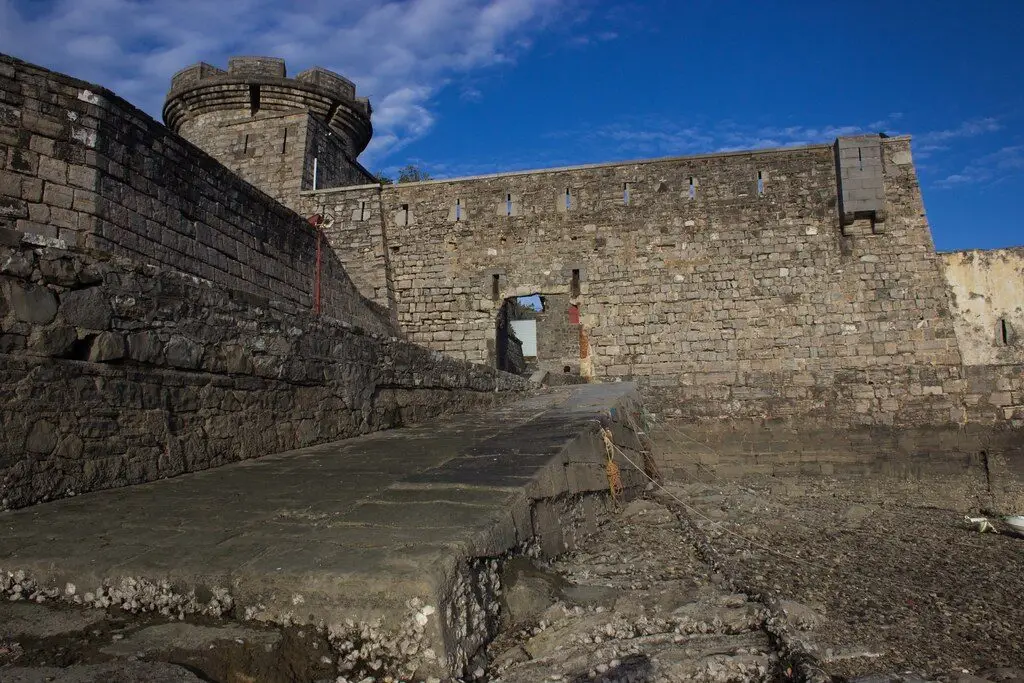
Construction of the fort began in 1627, although the structure underwent major reinforcement later in the century. In 1681, the famous military engineer Sébastien Le Prestre de Vauban ordered the construction of large defensive walls around the fortress. Vauban’s modifications transformed Socoa into a more advanced coastal defensive complex adapted to artillery warfare.
The fort continued to serve military purposes until the end of the Second World War, reflecting the long strategic importance of the Basque coast between France and Spain. In 2011, the building was purchased from the French state by the local intermunicipal authority, helping preserve an important element of Basque maritime heritage.
Practical Information for Visitors
Today, the Fort of Socoa remains one of the most photographed landmarks near Saint-Jean-de-Luz. Visitors can admire its massive stone walls, coastal setting, and panoramic views across the bay toward Saint-Jean-de-Luz.
The fort is easily accessible on foot from Socoa harbor and can be combined with visits to nearby beaches, the coastal path, and the historic centers of Ciboure and Saint-Jean-de-Luz.
Updated on May 20, 2026