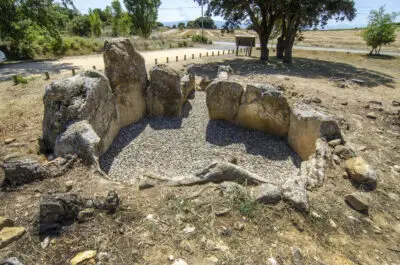
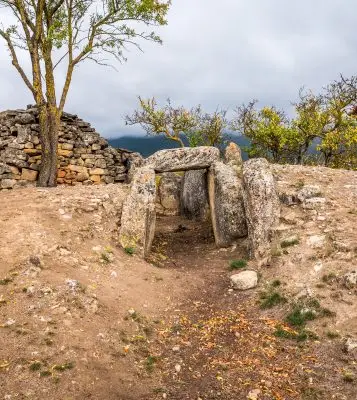
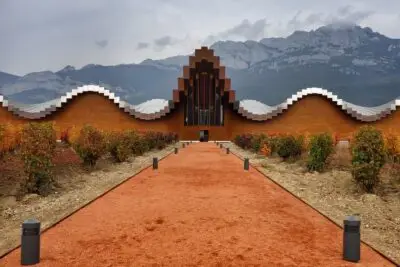
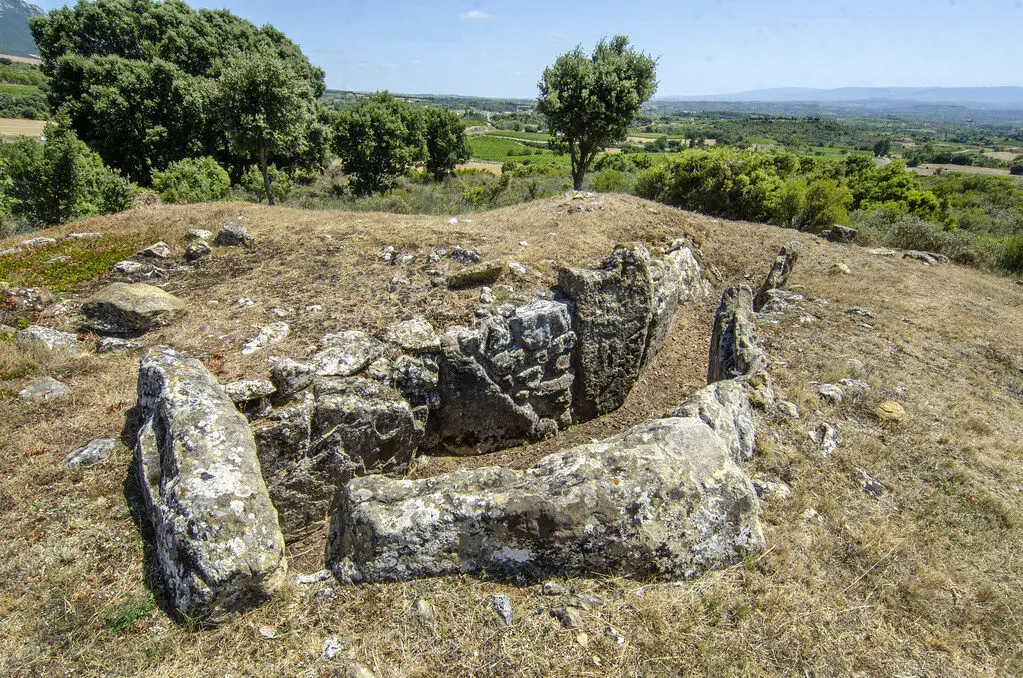
The Dolmen de Layaza is a significant prehistoric monuments in Rioja Alavesa, located within the municipality of Laguardia on the southern slopes of the Sierra de Cantabria, in the Basque Country. Although smaller in appearance than other nearby dolmens, Layaza is considered archaeologically important due to its elevated location, complex structure, and unique engraved stones.
Like many megalithic structures in the Basque Country, it was built during the Late Neolithic and Chalcolithic periods as a collective burial site for early pastoral communities.
Structure and Archaeology
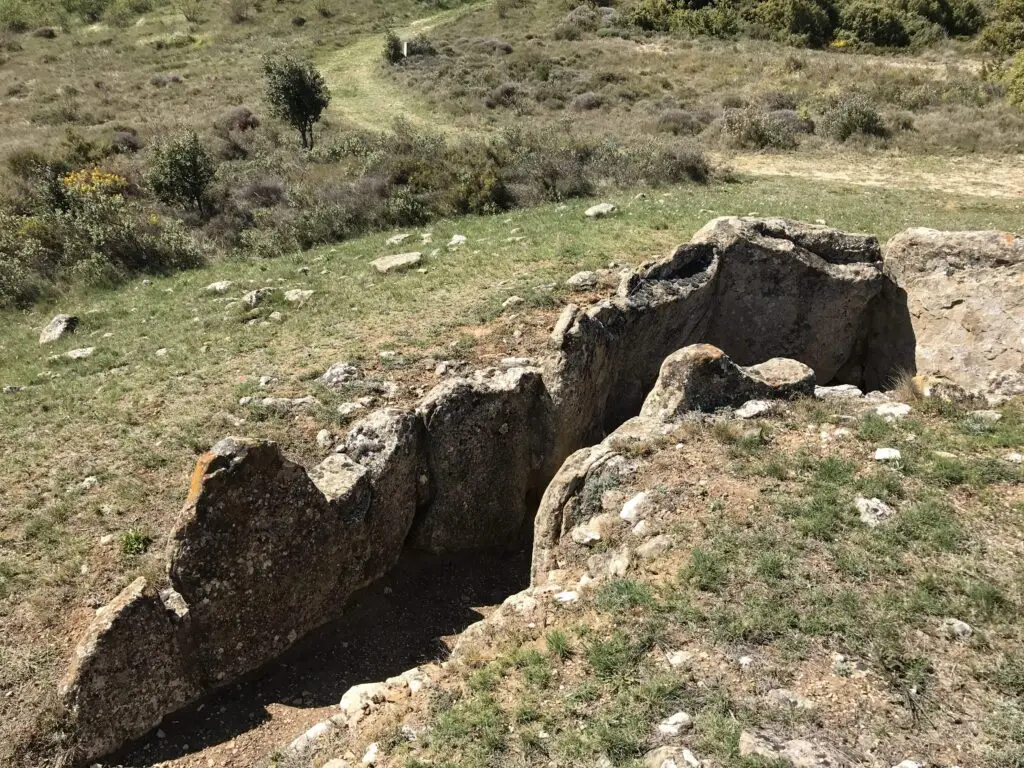
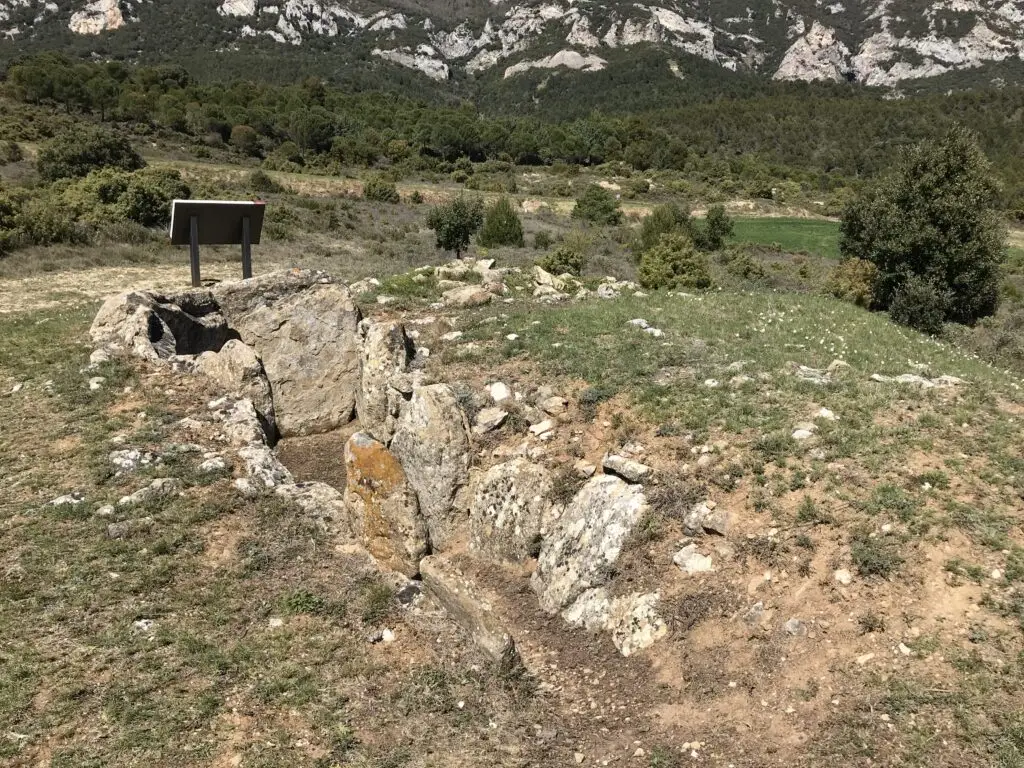
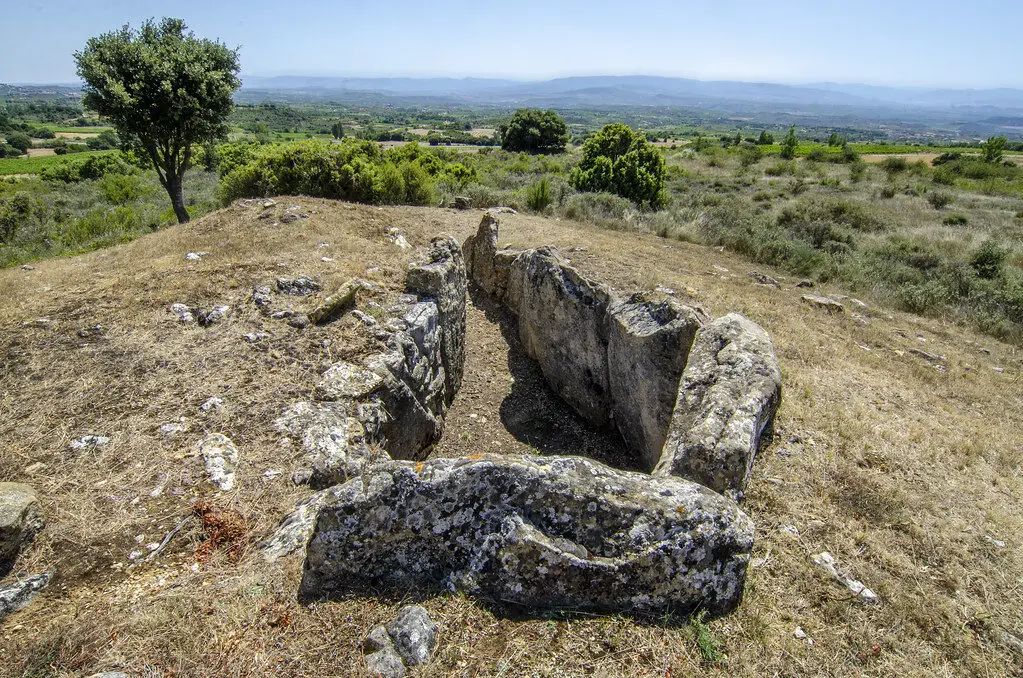
The dolmen was discovered in 1955 by Domingo Fernández Medrano and excavated in 1957 by José Miguel de Barandiaran and Juan María Apellániz, two of the most important figures in Basque archaeology. The excavation revealed a segmented corridor tomb constructed with local sandstone. The monument consists of:
- An irregular tumulus measuring approximately 26 by 16 meters
- A burial chamber formed by seven orthostats
- A corridor built with six stone slabs
One of the stones contains relief engravings of uncertain interpretation, possibly linked to symbolic or ritual elements associated with prehistoric beliefs.
Archaeologists found only limited grave goods because the dolmen had been looted long before modern excavations. Basque folklore associated dolmens with hidden treasures known as idinarru, mythical skins filled with gold coins. Despite the disturbance, excavations recovered human remains from at least three individuals, flint tools, ceramic fragments, and stone implements.
Radiocarbon dating carried out in 2012 confirmed that the dolmen remained in use between the Chalcolithic and Early Bronze Age, roughly 4100 to 3600 years ago.
Orientation and Symbolism
Like many megalithic monuments in the Basque Country, the Dolmen de Layaza appears aligned toward the winter solstice sunrise, suggesting possible ritual or cosmological significance connected to solar cycles and seasonal change.
Practical Information for Visitors
The dolmen is located near the A-2124 road between Laguardia and the Herrera mountain pass. Although there is no dedicated parking area or marked footpath, an informational panel explains the history and structure of the monument.
Updated on May 16, 2026