This is not a tourist attraction and may not offer toilets, parking, or other services. Visit at your own responsibility.
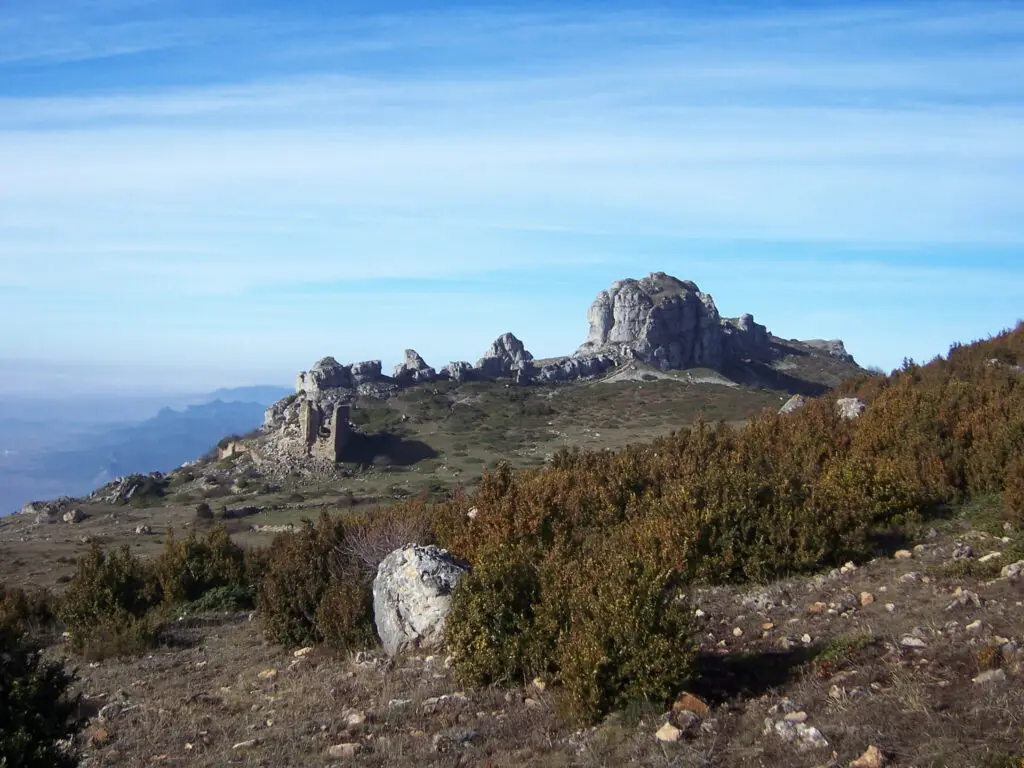
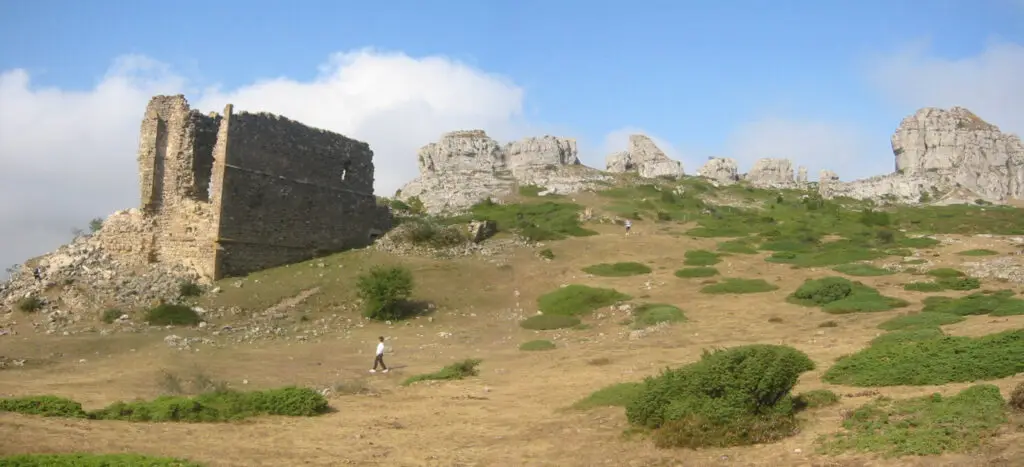
The ruins of the Monasterio de Santa María de Toloño are located high in the Sierra de Toloño mountains above Labastida, in the Rioja Alavesa region of Araba, Basque Country. Surrounded by rugged limestone landscapes and overlooking the Ebro valley, the monastery is one of the most historically significant religious sites in southern Araba and an important example of medieval monastic life connected to the frontier territories between Castile and Navarre.
Today, only partial remains of the monastery survive, yet the site continues to hold considerable archaeological, cultural, and symbolic importance within Rioja Alavesa.
Historical Origins of the Monastery
The origins of Santa María de Toloño date back to at least the 13th century, although some historians believe earlier religious activity may have existed on the mountain before the formal establishment of the monastery. Its isolated position in the Sierra de Toloño reflects the medieval tradition of creating remote religious communities dedicated to contemplation, pilgrimage, and spiritual retreat.
Throughout the Middle Ages, the monastery maintained close ties with nearby settlements such as Labastida and other villages of Rioja Alavesa. The monks played an important role in managing agricultural land, mountain routes, and local religious life in the surrounding region of Araba.
The monastery also occupied a strategic position overlooking routes linking the Ebro valley with the northern Basque territories. This frontier location made the surrounding mountains historically important during periods of political conflict between the kingdoms of Castile and Navarre.
Architectural Remains and Landscape
During the First Carlist War (1833–1840), the monastery was heavily damaged and ultimately abandoned.
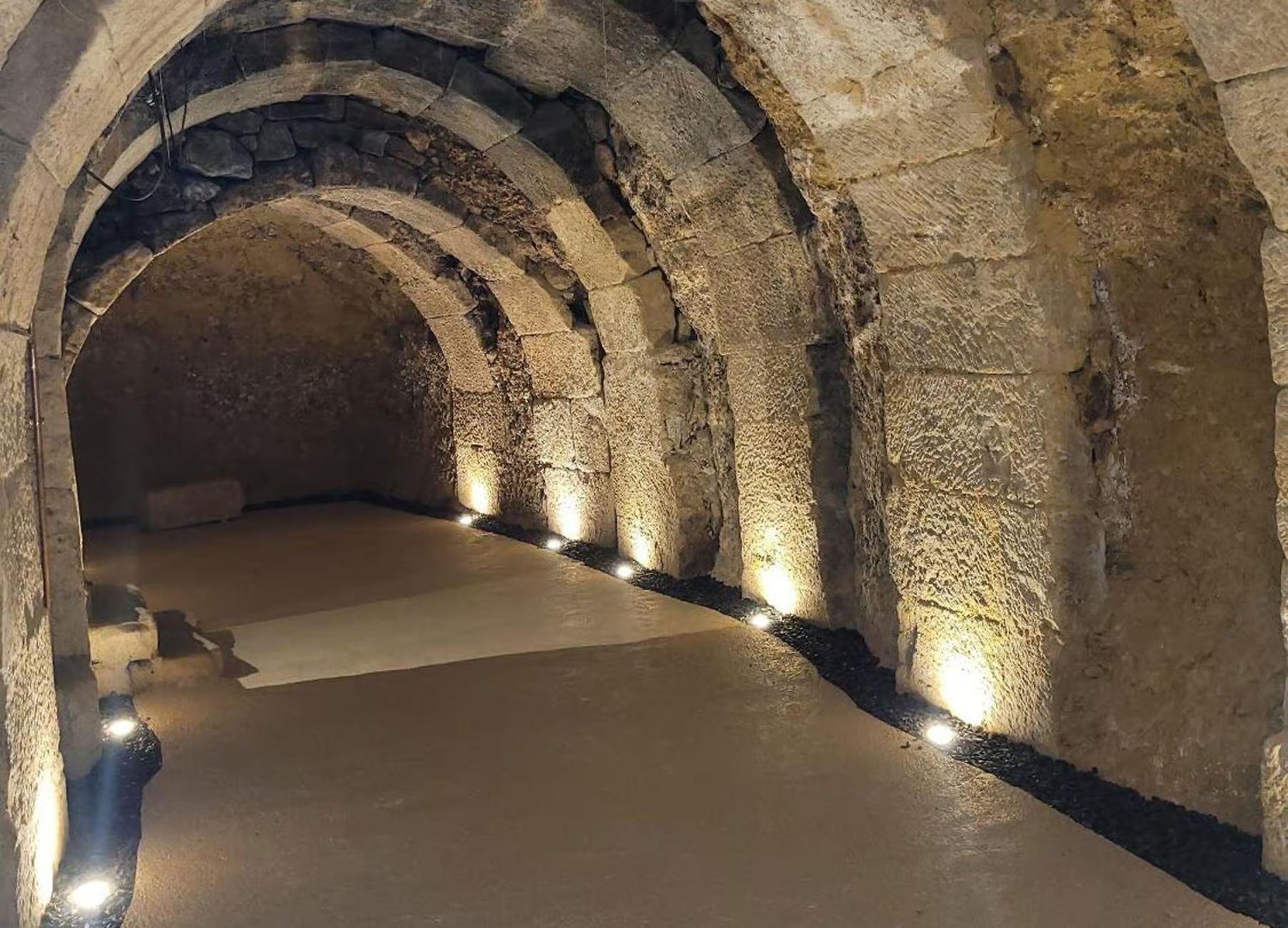
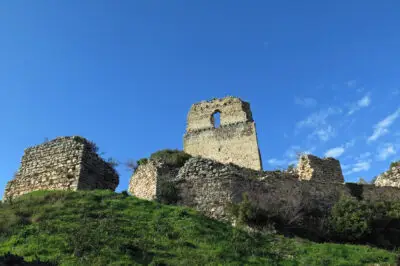
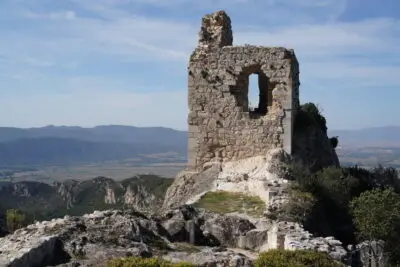
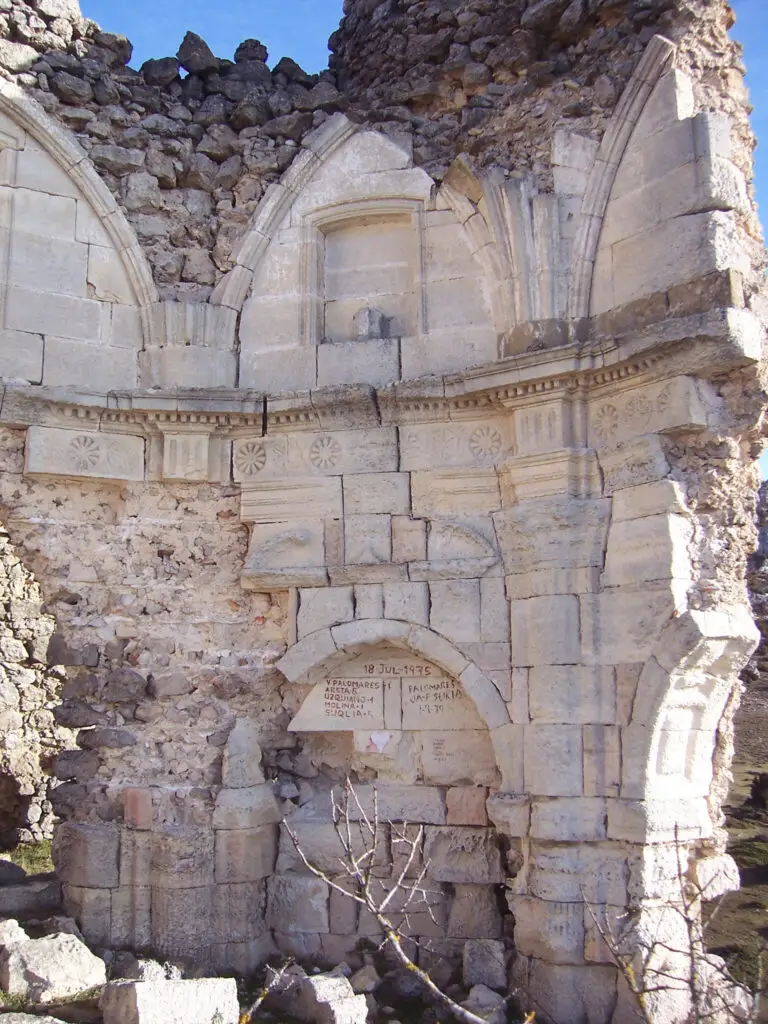
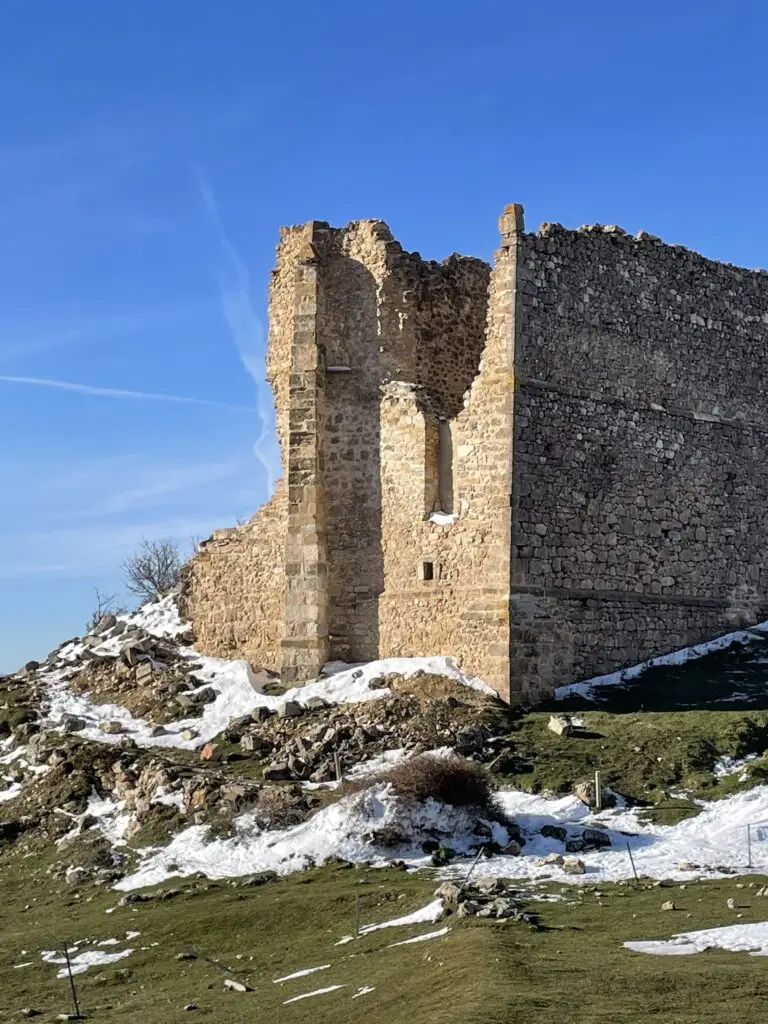
Now in ruins, parts of the original stone structure remain visible, including sections of walls, foundations, arches, and the layout of the former religious complex. The exposed masonry illustrates the austere architectural style typical of mountain monasteries in medieval northern Spain.
The location itself is one of the defining features of Santa María de Toloño. From the monastery, there are panoramic views across:
- Labastida
- The vineyards of Rioja Alavesa
- The Ebro valley
- The Sierra de Cantabria mountain range
The contrast between the mountainous terrain and the cultivated wine landscape below highlights the geographic diversity of the Basque Country.
Practical Information for Visitors
The monastery ruins are usually reached via hiking routes beginning near Labastida. The ascent involves mountain paths with moderate elevation gain, making sturdy footwear advisable. The fastest way to reach the ruins is from the parking area located along the LR-317 road, after driving approximately 1.4 km from Rivas de Tereso to the Alto de Rivas de Tereso mountain pass.
Spring and autumn are generally considered the best seasons to visit due to milder temperatures and clearer views across Rioja Alavesa and southern Araba.
Updated on June 14, 2026