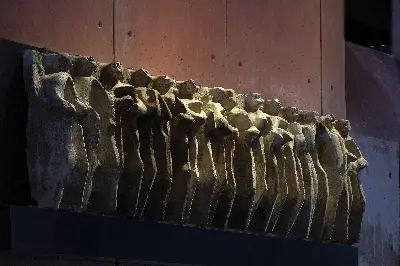
Castle of Irulegi is one of the most historically significant fortified sites in Navarre. Located at an altitude of 893 metres on Mount Irulegi, southeast of Pamplona, the castle combines medieval military history with important archaeological discoveries connected to the ancient Vascones, ancestors of the Basque-speaking population.
Origins and Medieval Construction
The fortress was constructed for the defence of the Noáin basin and is documented from the late 12th century, although local legends suggest the existence of an earlier defensive complex during the raids of Almanzor in the 11th century. The castle became one of the clearest examples of medieval military architecture in the Kingdom of Navarre.
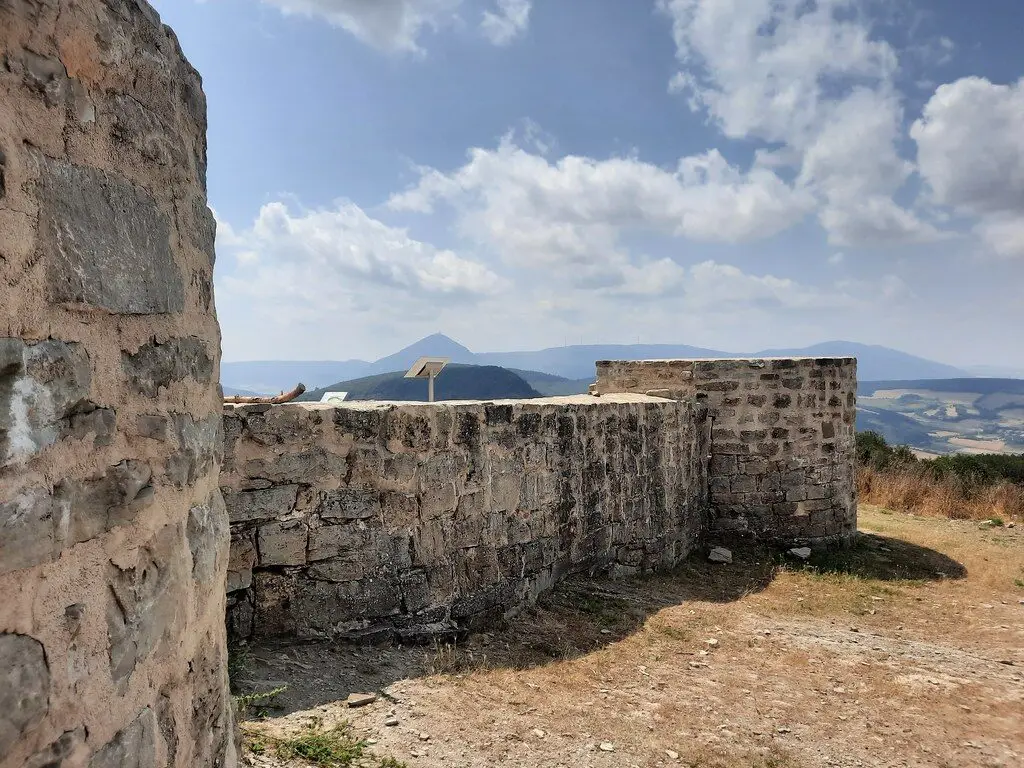
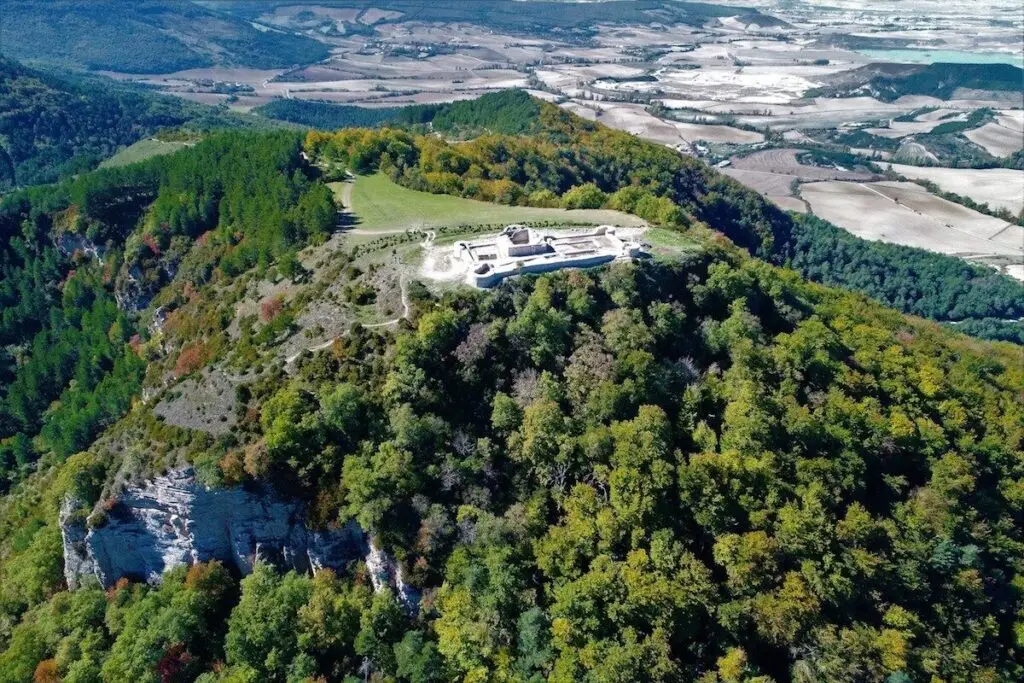
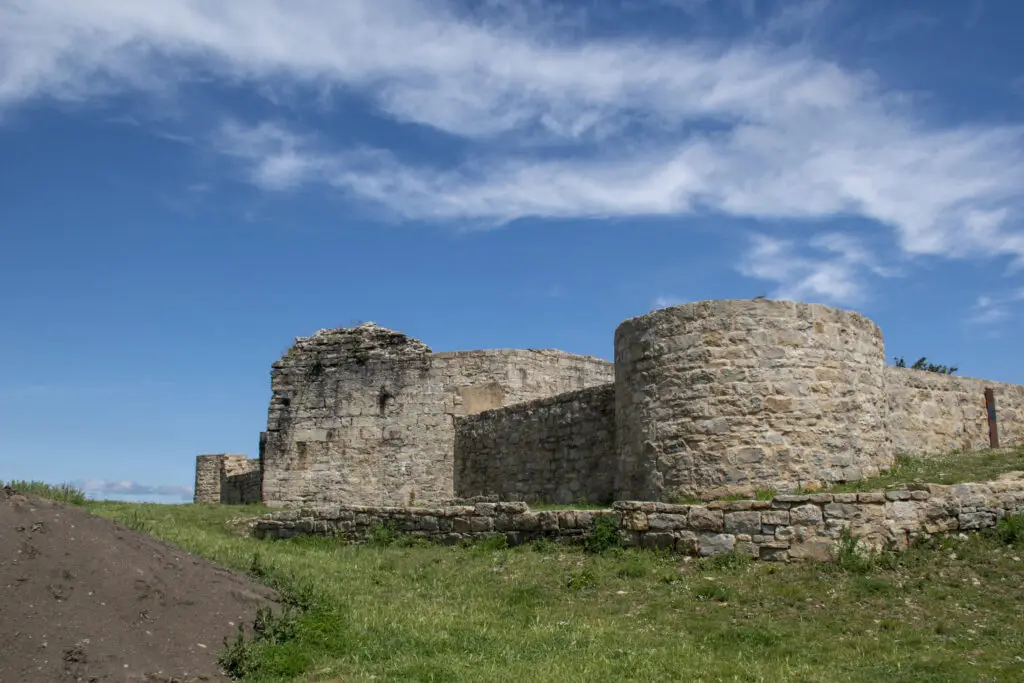
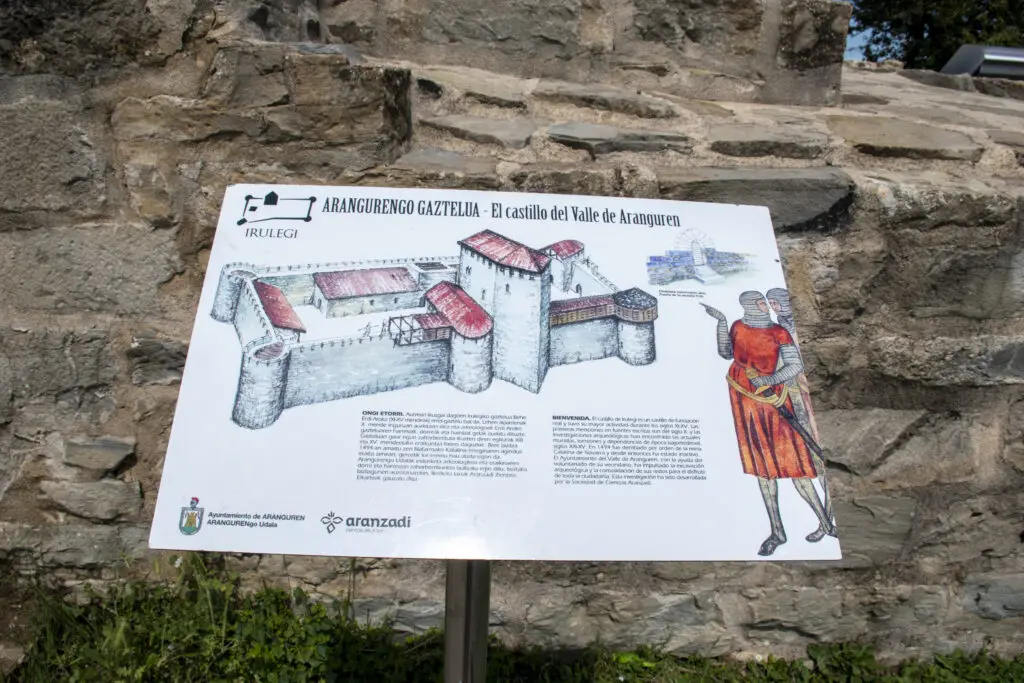
Its most distinctive feature is the pentagonal keep shaped like a ship’s prow, unique among Navarrese castles. In 1416 the fortress underwent major modernisation works intended to resist increasingly powerful artillery attacks. A triangular defensive structure was added to the front of the main tower, creating the characteristic pentagonal design, while a rectangular enclosure with corner towers reinforced the defensive perimeter.
Destruction and Political Conflict
It is known that by 1492 part of the structure had already been demolished, following the policy initiated by the Navarrese monarchs to put an end to the civil conflict that had devastated Navarre for almost five decades.
In 1494, the monarchs of Navarre, Catherine of Foix and John III of Navarre, ordered the dismantling of the castle because it had fallen under the control of the Beaumont faction, which dominated the Pamplona basin during the civil conflicts of late medieval Navarre.
Over time, the fortress gradually disappeared, although parts of the structure have since been partially reconstructed. Today the ruins still preserve sections of walls and defensive elements that illustrate the strategic importance of the site.
The Iron Age Settlement and the Hand of Irulegi
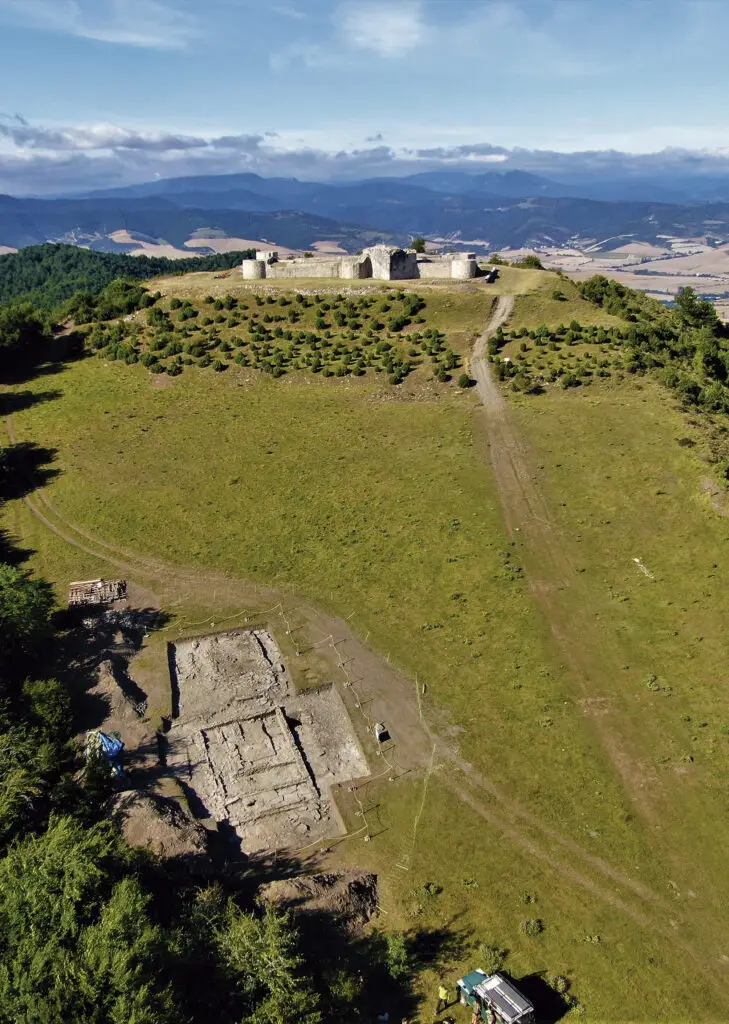
Long before the medieval castle existed, Mount Irulegi hosted an Iron Age settlement of the Vascones. This fortified settlement extended across the area occupied by the castle and the plateau in front of it. Archaeological remains of walls and buried structures are still visible.
The settlement was destroyed around 76 BC during the Sertorian Wars. In 2022, archaeologists discovered the famous Hand of Irulegi, an extraordinary bronze artifact bearing inscriptions possibly written in a Vasconic language considered a predecessor of modern Euskera. The discovery became internationally important for the study of Basque linguistic history.
Practical Information for Visitors
The castle ruins and the Iron Age settlement can be reached through hiking routes ascending Mount Irulegi. The two most common ascents are from the village of Laquidáin and from the village of Ilundáin.
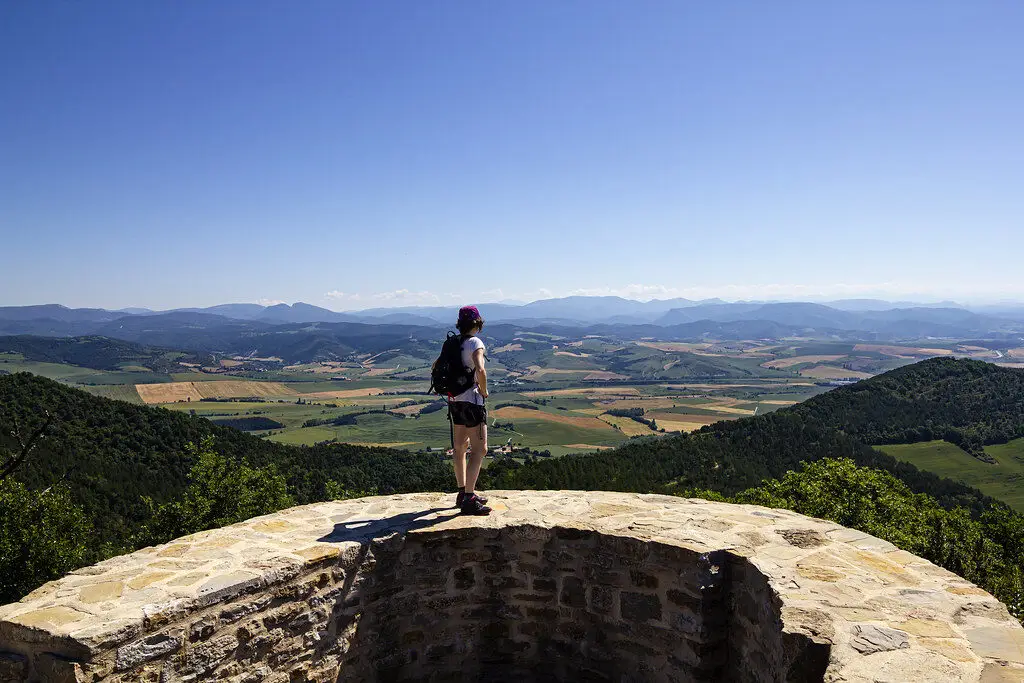
The walk offers panoramic views over central Navarre and the Pamplona basin. Because the site combines archaeology, mountain scenery, and medieval history, it has become one of the most interesting cultural excursions in inland Navarre and the wider Basque Country.
Updated on May 28, 2026