If you are planning a short trip to Donostia — or San Sebastián, as you will often see it called in English — two days is a very good amount of time to get a feel for the city. You will not see absolutely everything, of course, but you can cover the main sights, eat a ridiculous number of pintxos, enjoy the beaches and even escape into the surrounding countryside for a traditional Basque cider-house lunch.
One of the things I like most about Donostia-San Sebastian is that it is a very manageable city. Around 190,000 people live here, but the centre feels much smaller, and most of the places you will want to visit are close enough to walk between. The sea and the Urumea River also make it particularly pleasant to explore on foot.
You really do not need to spend your weekend jumping on buses or taxis. In fact, I would recommend walking whenever possible. The journey is often part of the experience, especially when you are walking along La Concha or the Urumea.
A quick note on pacing: This two-day guide is packed with highlights, but don’t feel pressured to tick off every single box. San Sebastián is a city best enjoyed without rushing. If you need a breather, skip a sight and grab a seat at a lively outdoor terrace on the Boulevard or in the Romantic Quarter, or simply sit on a bench overlooking the Urumea river. Sitting back and taking in the local atmosphere is a destination in itself.
Table of Contents
- Day 1: The Old Town, La Concha and Monte Igeldo
- Day 2 – Mount Urgull, a Basque cider-house lunch and the Urumea
- Are two days enough for Donostia?
- Where to sleep in Donostia-San Sebastian?
If you do need public transport, there is a useful little trick: get a MUGI anonymous card. It costs €5 and gives you discounted fares on the local transport network. The card is available through MUGI sales points and is particularly useful for visitors travelling together. It is not a personalised card, so it can be shared on buses: on Dbus there is no limit to the number of people travelling together as long as there is enough credit, while Lurraldebus allows up to nine people. One important exception is Euskotren, where the card cannot be used simultaneously by several passengers.
Day 1 – The Old Town, La Concha and Monte Igeldo
Morning: Alderdi Eder, the Boulevard and the Old Town
I would start the first morning at Alderdi Eder, the elegant park directly in front of La Concha Bay.
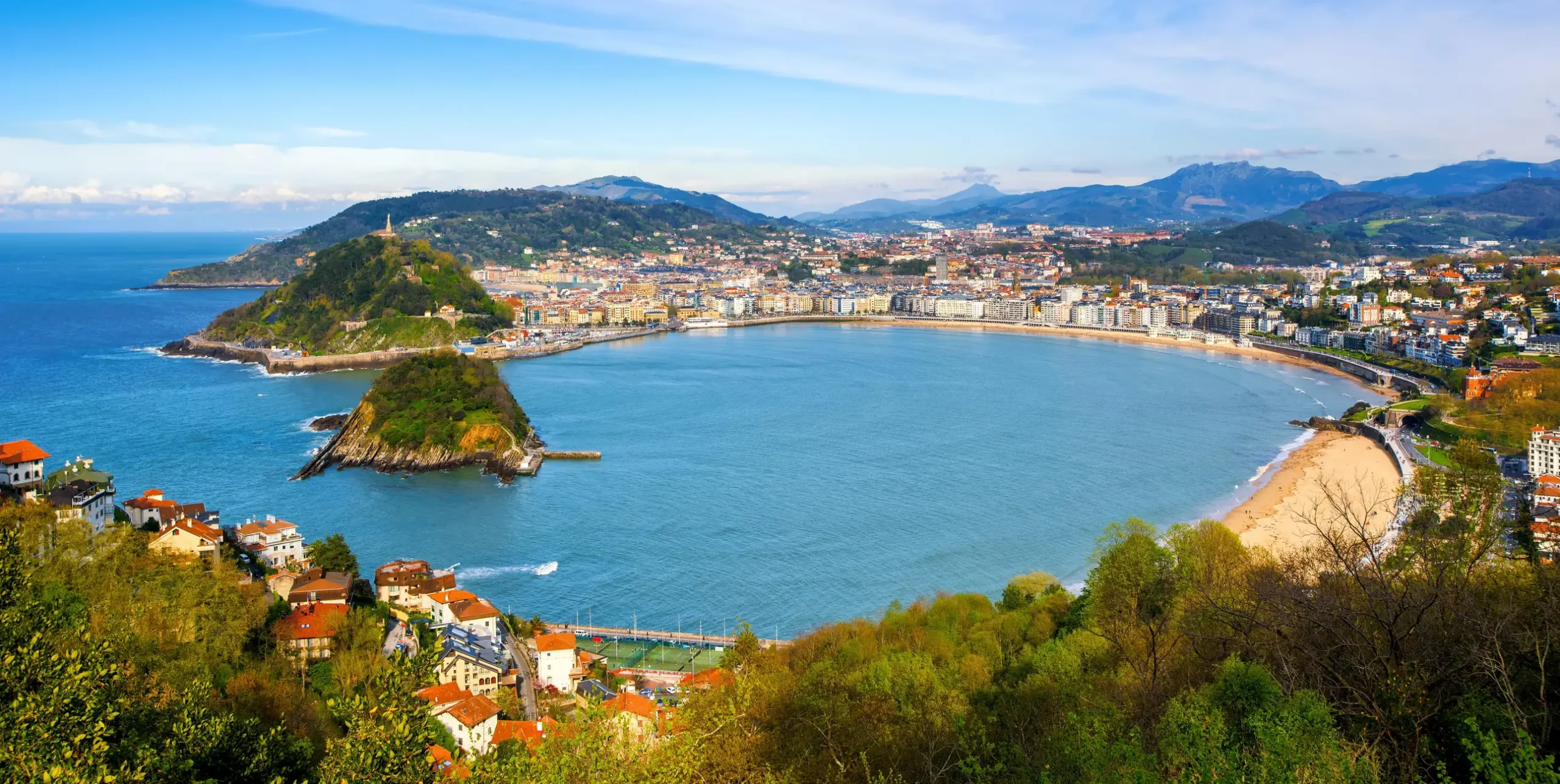
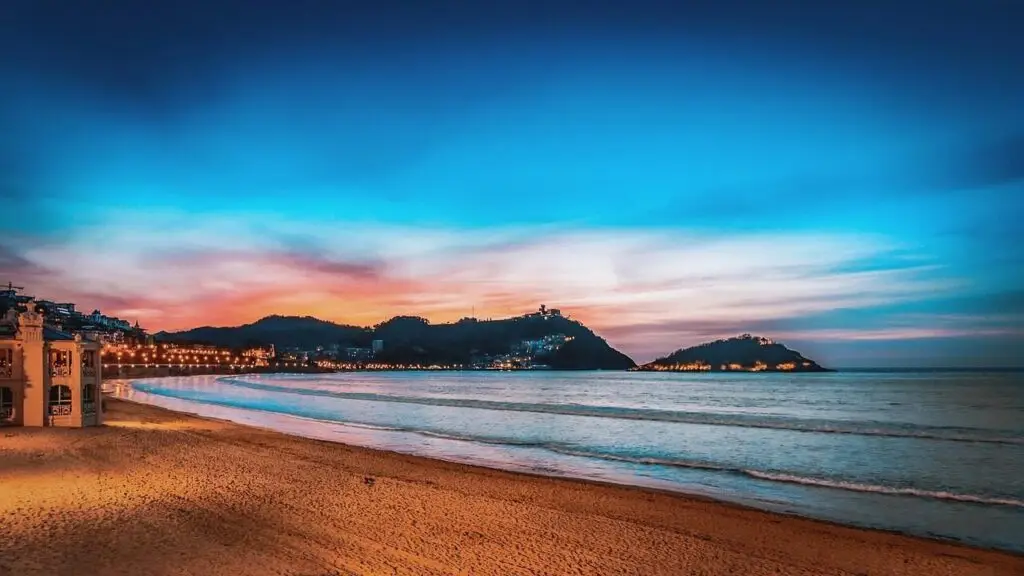
This is one of those places where you do not really need a plan. Take a stroll through the gardens, have a look at the famous carousel and, most importantly, stop for a moment to enjoy the view. La Concha is right in front of you, with the beach curving around the bay and Monte Igueldo rising at the far end.
From Alderdi Eder, walk towards the Boulevard, one of the main meeting points between the modern part of the city and the Old Town. The Boulevard is a lively pedestrian-friendly area with shops, cafés and plenty of people coming and going. It is also a useful landmark because from here you can simply walk straight into the Donostia’s Old Town, known as Alde Zaharra in basque.
The Old Town is where I would spend much of the rest of the morning. The streets are narrow and atmospheric, and this is where you start to understand why Donostia is such a good city for wandering without a particular plan.
The area was largely rebuilt after the devastating fire of 1813, so much of what you see today is not medieval in appearance, even though the neighbourhood itself has much older origins. The best thing to do is simply walk around the streets, look up at the buildings and allow yourself to get slightly lost.
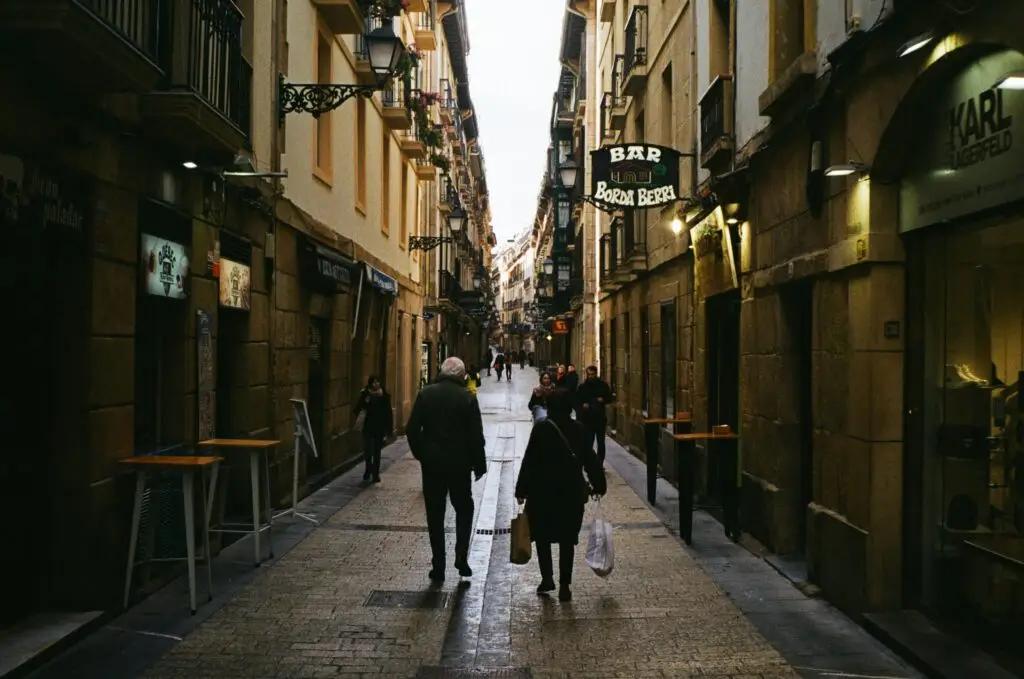
As you walk through the historic lanes of the Alde Zaharra, don’t miss La Bretxa Market—an iconic historic hall where local producers showcase pristine regional produce, artisan cheeses, and daily catches straight from the Cantabrian Sea, offering an authentic glimpse into the soul of Basque gastronomy.
Just steps away from the bustling market lies the grand Plaza de la Constitución, a picturesque arcade-lined square famous for the numbered balconies that recall its past as the city’s primary bullring. Architectural enthusiasts should then stroll over to the striking Baroque facade of the Basílica de Santa María del Coro, dramatically framed at the end of Calle Mayor, before taking in the nearby Iglesia de San Vicente, the oldest standing building in San Sebastián.
Soon enough, you’ll be surrounded by pintxo bars. Resist the urge to dive in just yet—a much better pintxo crawl awaits you at lunch! First, there’s one essential stop: ice cream. And be warned, Donostia is a dangerous town for ice cream lovers.
Around the Old Town, I usually recommend stopping at Arnoldo or Oiartzun. Both are good places to take a short break and have an ice cream before continuing.
It may seem a little early for dessert, but you are on holiday. And walking around San Sebastián is a perfectly respectable excuse for having one.
Time for a Museum: San Telmo, Aquarium or Maritime Museum
After exploring the Old Town, I would choose one museum rather than trying to squeeze all three into the morning. Which one you choose really depends on what interests you.
San Telmo Museoa is probably the best option if you want to understand Basque history and culture. It is housed in a former Dominican convent and its collection covers a huge range of subjects, from art and archaeology to traditional Basque life. The museum’s collection contains more than 55,500 inventoried objects, although only a portion is displayed in the permanent exhibition.

If you are more interested in the sea, or you are travelling with children, I would choose the Aquarium San Sebastián. It is a beautiful aquarium right beside the harbour, with a strong focus on the marine life and maritime history of the Basque coast. One of its highlights is the large underwater tunnel, where you can walk through the aquarium while sharks, rays and other fish swim above and around you. It is a particularly enjoyable visit with children, but I think it is worth visiting even if you are travelling without them.
The third option is the Euskal Itsas Museoa, the Basque Maritime Museum, also down by the harbour. This is the one I would choose if you are particularly interested in the relationship between the Basque Country and the sea. The museum explores Basque maritime heritage and is housed in a historic building in the port that dates from the eighteenth century.
So don’t feel that you have to visit all three. Pick the one that sounds most interesting to you and save the rest for another trip.
Lunch: Pintxos and the famous cheesecake
Now comes one of the most important parts of the day: lunch.
Rather than sitting down for a traditional three-course meal, I would spend lunchtime doing what Donostiarras do best — eating pintxos.
The Old Town is full of bars where you can order one or two things, have a drink, move on to another place and repeat the process. It is much more fun than choosing one restaurant and staying there for two hours.

There are dozens of good options, but some of the places I particularly like include La Cuchara de San Telmo, Gandarias, Borda Berri, Bar Nestor, A Fuego Negro and Ganbara. Don’t try to visit them all. Pick a few, order whatever looks good and see where the afternoon takes you.
And then there is La Viña.
This is where the famous San Sebastián cheesecake was created by Santiago Rivera in 1990. It is now known internationally as Basque cheesecake, but here it is simply tarta de queso — and the original is still served at La Viña on Calle 31 de Agosto.

I would definitely have a slice. Or share one if you are already full from the pintxos. The top should be deeply caramelised and the centre wonderfully creamy.
If you are wondering whether San Sebastián cheesecake really deserves all the fuss, this is the place to make up your own mind.
If you are not confident ordering in Spanish, or simply find it difficult to navigate a busy pintxos bar, I would recommend taking the San Sebastian Food Tour with Pintxos & Drinks with a Local. This 3-hour guided tour takes you around the charming streets of the Old Town with a local guide, stopping at various local favourite bars for pintxos and four drinks. You will savor local ham, gildas, pintxos, local wine and cheesecake.
Afternoon: La Concha, Miramar and the Peine del Viento
After lunch, it is time to walk.
Head towards La Concha Beach and follow the promenade around the bay. This is probably the most famous walk in San Sebastián, and it is easy to understand why.
The beach itself is beautiful, but what makes the walk special is the combination of the bay, the elegant buildings along the waterfront and the mountains surrounding the city.
Take your time here. You do not need to rush towards the next attraction.
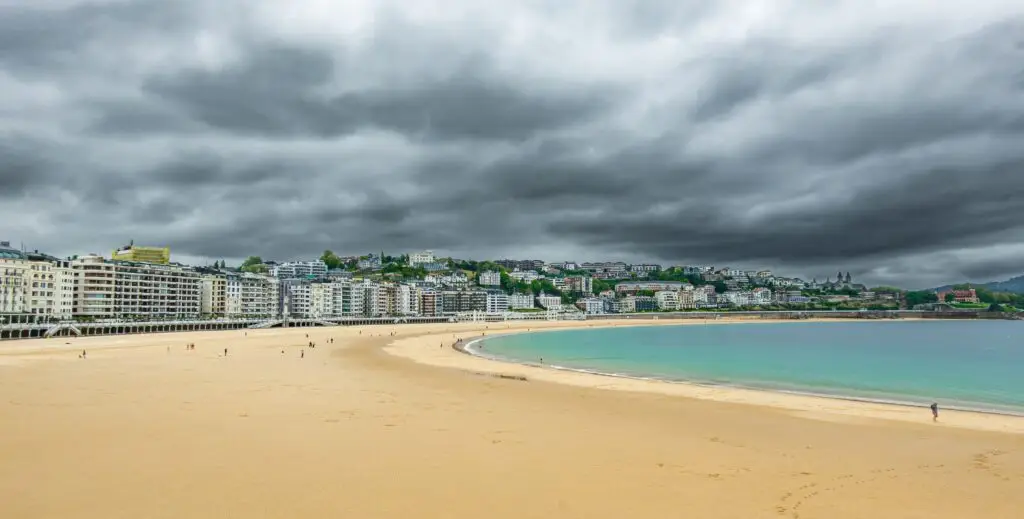
Eventually you will reach Miramar Palace, built in the nineteenth century as a summer residence for the Spanish royal family. The palace and its gardens occupy an exceptionally beautiful position overlooking La Concha, with views across the bay towards the city.
Continue towards the Antiguo neighbourhood and pass through the tunnel that takes you towards Ondarreta and the western end of the bay.
From here, continue to the Peine del Viento, Eduardo Chillida’s famous sculpture installation at the foot of Monte Igueldo.

This is one of those places where photographs do not quite capture the experience. The sculptures are built into the rocks at the edge of the sea, and when the waves are rough, water and spray are thrown through the openings in the rocks.
Stand there for a while and watch the sea. On a calm day it is beautiful; on a stormy day it can be spectacular.
Late afternoon: Up to Monte Igeldo
From the Peine del Viento, walk back a short distance to the Funicular de Igeldo.
The funicular itself is part of the attraction. It opened in 1912 and still retains its old-fashioned character, including its wooden carriages. Today it takes visitors from the lower station up to the Monte Igeldo amusement park.
At the top, you get one of the classic views of San Sebastián: La Concha, the city, the sea and the surrounding coastline all spread out below you.
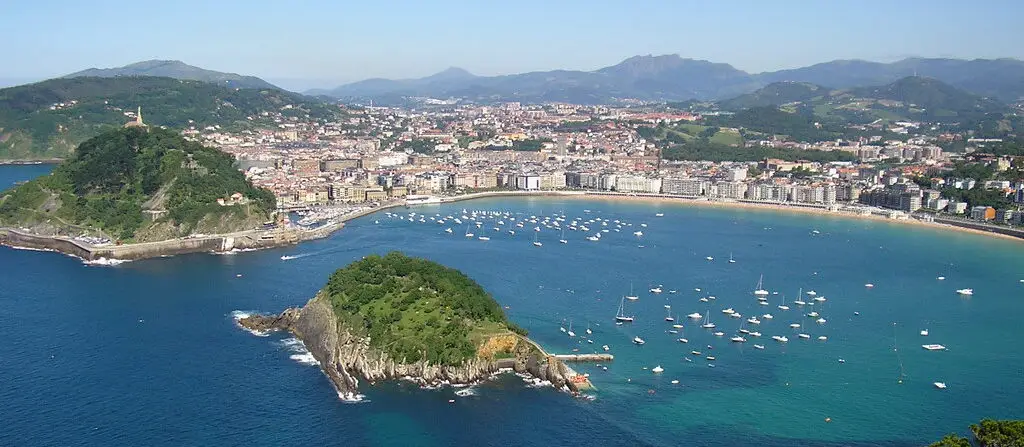
And then there is the Monte Igeldo Amusement Park.
It is not a modern theme park. Quite the opposite. Monte Igeldo has an old-fashioned, almost nostalgic collection of attractions, some of which have been entertaining visitors for generations. There are rides such as the Swiss Mountain, the mysterious river, bumper cars, the labyrinth and the carousel.
If you are travelling with children, allow some time for the rides. If you are travelling without children, I would still go up — even if you only visit for the views and the wonderfully retro atmosphere.
The funicular currently runs approximately every 15 minutes, although I would always check the opening times before heading there because schedules and attraction opening times vary during the year.
After returning to the city, you have earned a relaxed evening.
Day 2 – Mount Urgull, a Basque cider-house lunch and the Urumea
Morning: Mount Urgull and Mota castle
Start your second morning by heading back towards the Old Town. This time, instead of stopping at the pintxos bars, walk right through it towards Monte Urgull.
Monte Urgull is one of the best places to appreciate how San Sebastián is positioned. The hill rises directly behind the Old Town and has paths winding through woodland, historic fortifications and viewpoints overlooking the sea and the city.
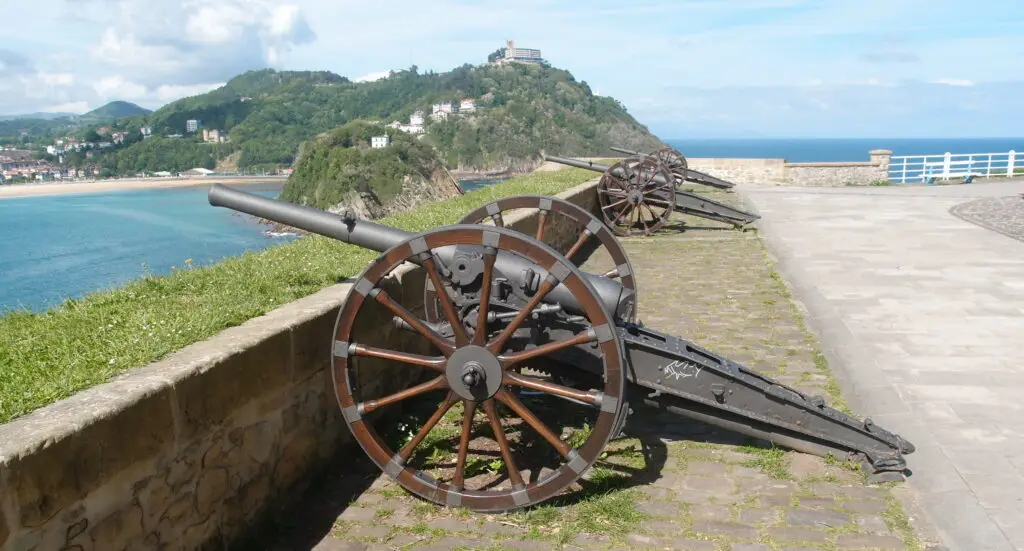
At the top you will find the Castillo de la Mota, a fortress whose history goes back centuries. The site was strategically important for defending the city, and remnants of the old fortifications are still visible as you walk around the hill.
The walk is not particularly difficult, but it is much more of a proper hike than yesterday’s stroll along La Concha. Wear reasonably comfortable shoes and allow yourself enough time to enjoy the different viewpoints.
One of my favourite things about Monte Urgull is that you are constantly getting different perspectives of Donostia. One moment you are looking over the harbour and Old Town; a few minutes later you are looking towards Zurriola and the open sea.
When you come back down, you will probably be ready for something sweet.
Pantxineta at Otaegui
Make your way to Pastelería Otaegui and buy a pantxineta.
This is one of those local pastries that visitors often overlook in favour of the more famous cheesecake, but I would definitely try it. Pantxineta is made with puff pastry and a creamy filling, usually pastry cream, and is one of the classic sweet treats associated with Gipuzkoa.
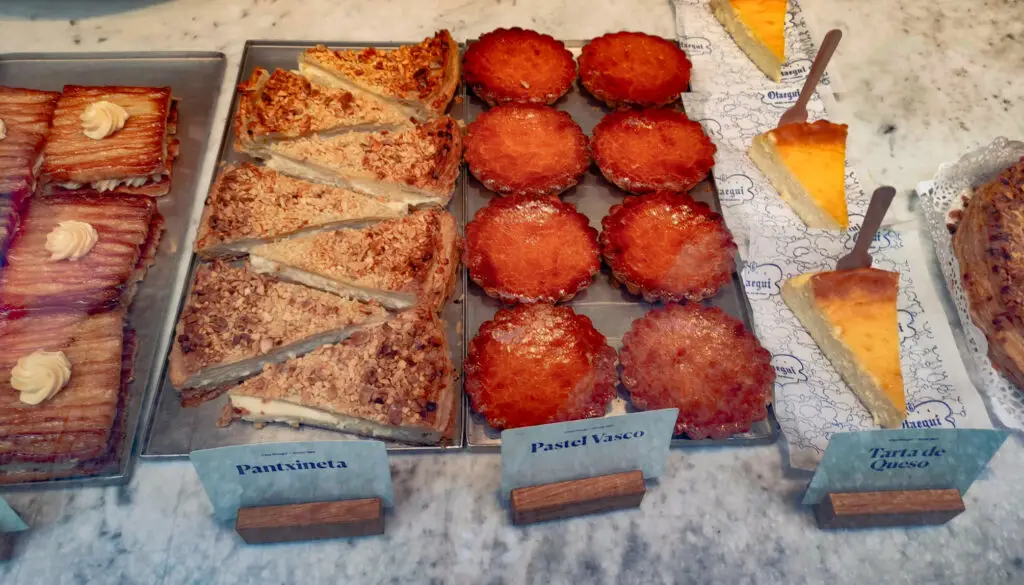
It is also a very good idea to buy one now rather than later if you want to take it back to your hotel or enjoy it during the afternoon.
But don’t eat too much. Lunch is going to be substantial.
Lunch: Go to a traditional Basque cider house
For the second day’s lunch, I would leave San Sebastián and head into the nearby cider country.
The villages of Astigarraga and Usurbil, just outside the city, are surrounded by apple-growing country and are home to traditional sagardotegiak, or Basque cider houses.
This is not just a place where you go to drink cider. The cider-house meal is an experience in itself.
The traditional menu is simple but extremely good: cider-house omelette made with salt cod, grilled cod with peppers, a huge piece of grilled beef, Idiazabal cheese, quince and walnuts. The exact menu varies from one cider house to another.
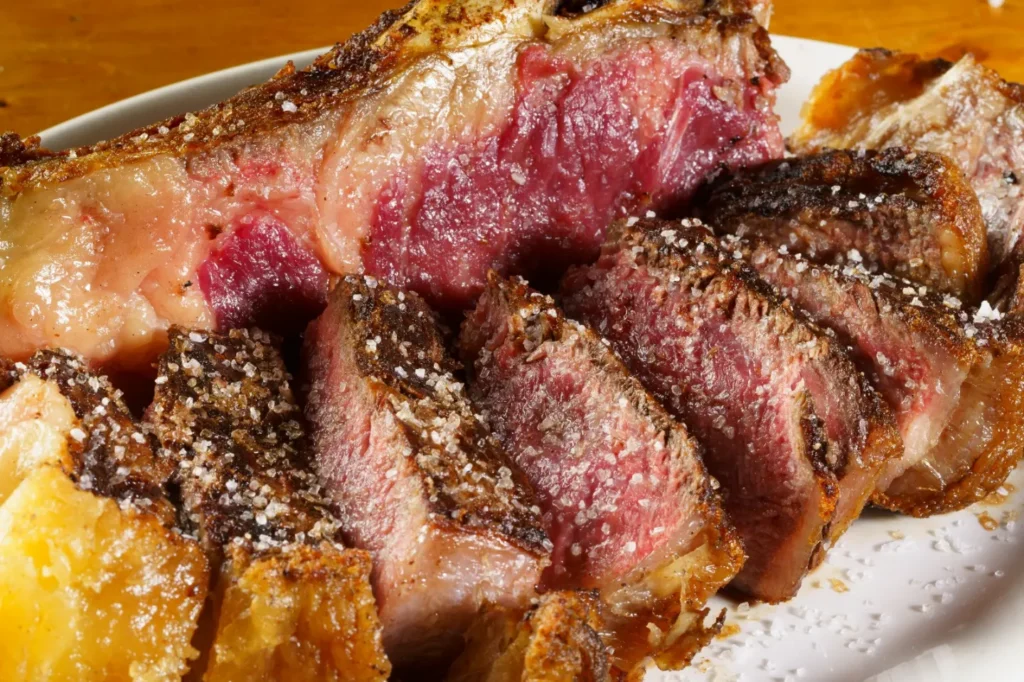
And then there is the cider.
In a traditional cider house, cider is served directly from the large barrels. Someone shouts “Txotx!”, everyone gets up from the table and follows the cider to the barrel, where you hold your glass at an angle while the cider is poured from a height.
You take just enough to drink immediately, then get back to your table and continue eating.
It is wonderfully informal and social, and it is much more fun if you embrace the whole thing rather than treating it like an ordinary restaurant.

Which cider house?
Petritegi, in Astigarraga, is probably the easiest recommendation for a first visit. It is around 7 km from central San Sebastián and has been producing cider for centuries. The current cider house is associated with a family tradition going back to 1526, and they offer both traditional cider-house meals and guided cider experiences.
Another option is Alorrenea, also in Astigarraga, or Saizar Sagardotegia in Usurbil. There are many other options, but these 3 are easy to reach and they are goods choices.
I would book in advance, particularly if you are visiting during cider season or at the weekend.
Getting there by car is easy, but if you are going to enjoy the cider, don’t drive. Take a taxi or use public transport. Petritegi provides bus and taxi information on its own website, and it is close enough to San Sebastián that a taxi is a straightforward option for a group.
This is one occasion when I would happily spend a little more on a taxi. You are there to enjoy the cider, not to count how many glasses you can safely avoid drinking.
Afternoon: Zurriola and the Kursaal
After lunch, return to Donostia and head towards Zurriola Beach.
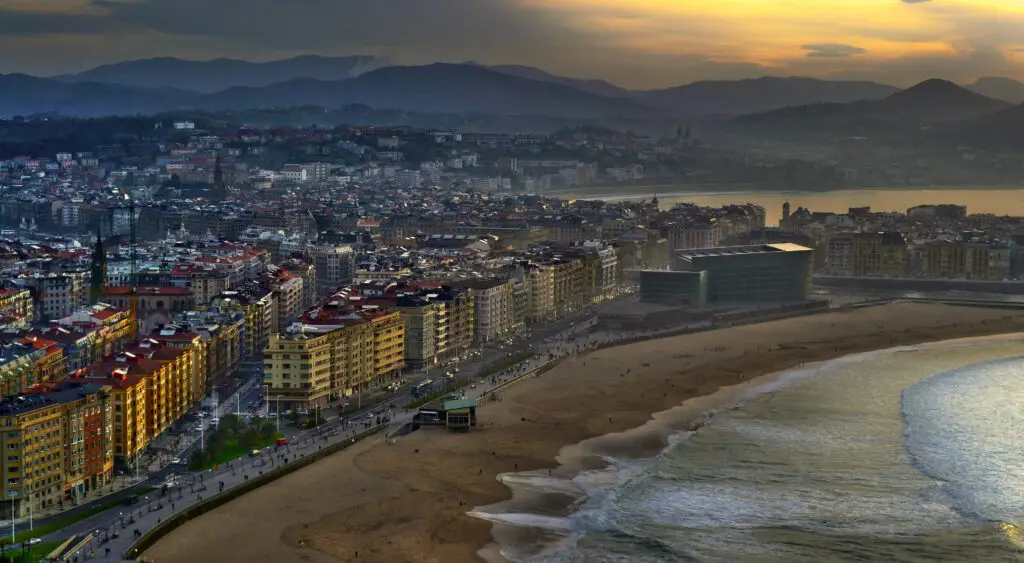
The atmosphere here is quite different from La Concha. Zurriola is more open to the Cantabrian Sea and is particularly popular with surfers. The beach is backed by the Gros neighbourhood, which has a younger, more relaxed atmosphere than some parts of the city.
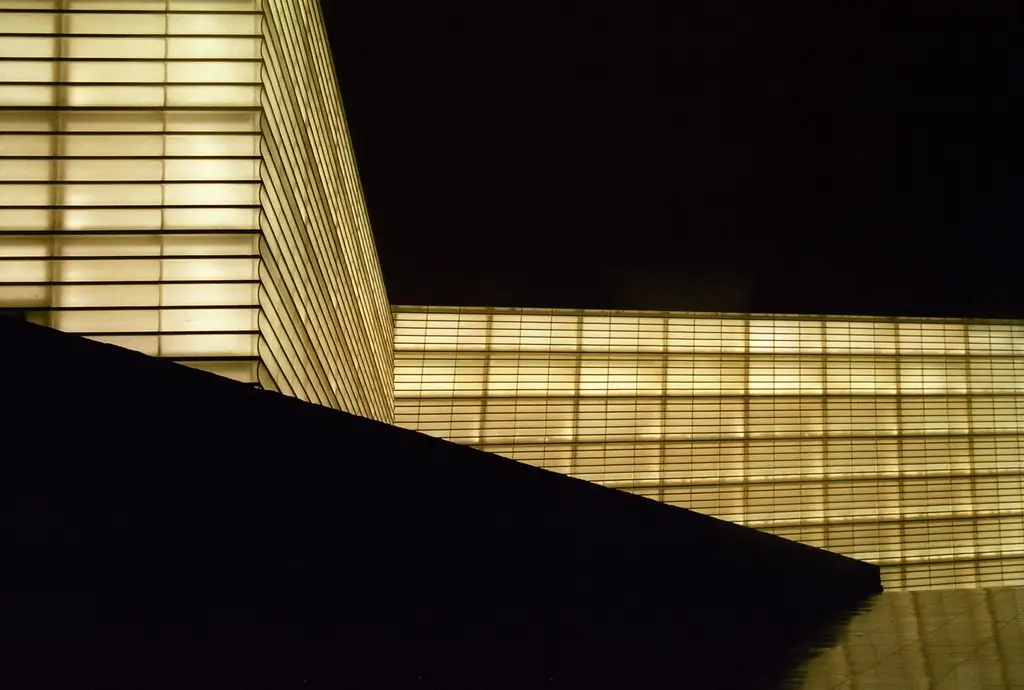
At the western end of the beach stand the two enormous glass cubes of the Kursaal, designed by architect Rafael Moneo. The Kursaal has become one of the modern symbols of San Sebastián, and the contrast between the contemporary building, the beach and the older architecture of the city is one of the things I like about this part of Donostia.
Now, if you feel like an ice cream, head towards the centre of the Gros neighbourhood and stop at Papperino Izozkiak for a scoop or two. Afterwards, continue your walk until you reach the Urumea River, but don’t cross it.
A final walk along the Urumea and Romantic Area
Follow the promenade along the right bank of the Urumea River.
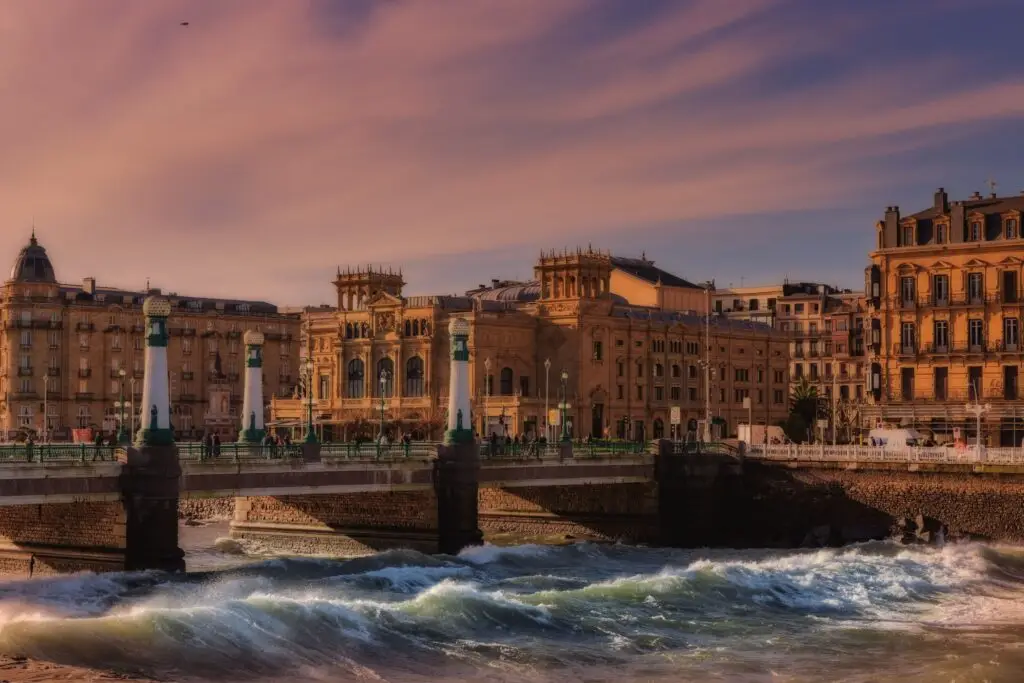
This is a much quieter way of experiencing the city, and it gives you a completely different impression of Donostia from the beaches and Old Town.
Look back towards the buildings along the river and the bridges as you walk. Eventually you can cross back over the Maria Cristina Bridge and continue towards the centre.
But before crossing the Maria Cristina Bridge, make one last food stop. Maison Pariès is a particularly good place to look for Gâteau Basque, the traditional Basque cake filled with either pastry cream or cherry jam. If you are looking for something to take home, this is the moment to buy it.
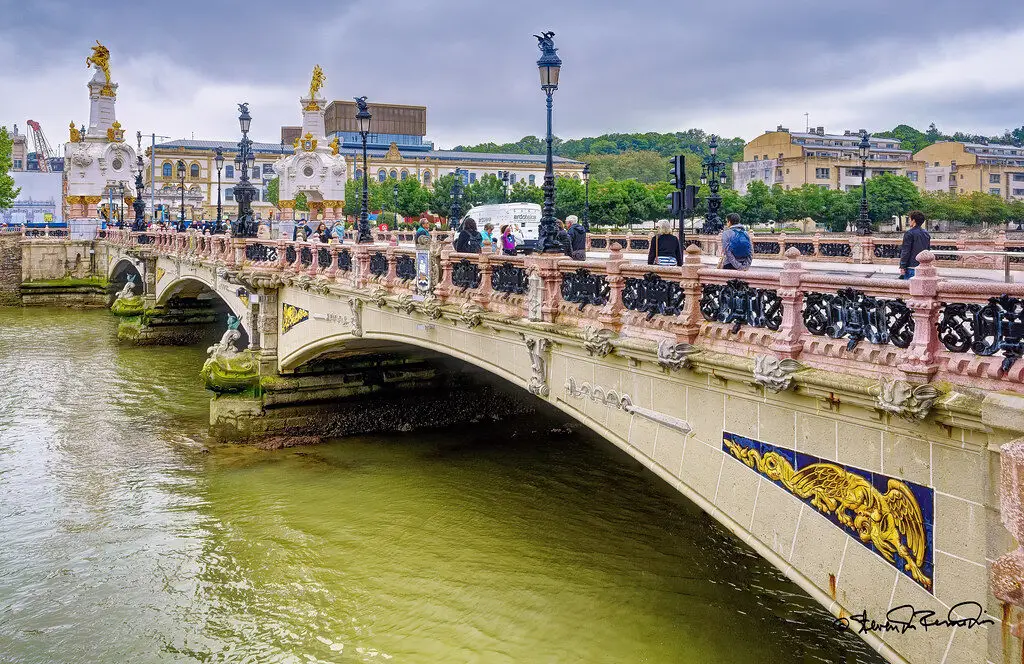
The bridge itself is worth stopping to admire. Opened in 1905, the Maria Cristina Bridge is one of the most elegant bridges in the city, with its ornate decoration and monumental entrance towers.
Crossing it takes you over the Urumea and into the central part of Donostia. You are now entering the Romantic Area of Donostia-San Sebastián, an area characterized by its elegant architecture, wide avenues, and spacious plazas.
Continue straight to reach the Cathedral of the Good Shepherd (Catedral del Buen Pastor). Constructed in the late 19th century, this beautiful church boasts a 75-meter bell tower, making it one of the tallest buildings in San Sebastián.
And if you still have room in your suitcase — or, more realistically, if you have somehow managed not to eat everything you bought earlier — make another stop at Aramendia Pastelería. Pick up a Basque cake to take home, or try some Inglesitos, one of Aramendia’s own specialities. Aramendia makes its Basque cake daily in its own bakery, using a shortcrust pastry made with butter and flour and filled with pastry cream.
At this point, you have probably reached the conclusion that a two-day trip to San Sebastián is mostly an elaborate excuse to eat. And honestly, I don’t think that is a bad thing.
A bit of shopping on Avenida de la Libertad
If you still have some time and energy before finishing your day, this is a good moment to do a little shopping. Avenida de la Libertad is one of the main commercial streets in San Sebastián and runs through the heart of the city.

Here you will find many of the well-known Spanish and international fashion brands, as well as local shops, cafés and other businesses. The surrounding streets are also worth exploring, particularly if you prefer smaller shops and want to find something a little more local.
I would not make shopping the main reason for visiting this part of the city, but after two days of sightseeing, walking along Avenida de la Libertad is a pleasant way to finish your visit to Donostia.
Are two days enough for Donostia?
For a first visit, I think two days works really well.
You get the elegant side of the city around La Concha, the narrow streets and pintxos bars of the Old Town, the views from both Monte Igeldo and Monte Urgull, the Peine del Viento, Zurriola and the Kursaal. You also get to experience something that is much harder to fit into a conventional city itinerary: a proper Basque cider-house lunch in the countryside.
And perhaps more importantly, the itinerary never requires you to spend the whole day rushing between attractions.
That is one of the reasons I like Donostia so much. It is compact enough to explore on foot, beautiful enough that the walks between attractions are part of the experience, and small enough that you can still leave some time for the most important thing of all: sitting down, ordering a drink and deciding which pintxo you are going to try next.
If you have more than two days, there is plenty more to explore around San Sebastián and the Gipuzkoa coast. But if two days is all you have, this itinerary gives you a pretty good taste of what makes Donostia special.
Where to sleep in Donostia-San Sebastian?
San Sebastián is a relatively compact city, but its neighborhoods are somewhat spread out. Choosing the right hotel location is key to making the most of your time. The best location for your hotel is the city center—specifically the area bounded by La Concha beach and the Urumea River, nestled between the Good Shepherd Cathedral and the Old Town.
In the other hand, since accommodation can be quite expensive, the most important factors to weigh when picking a place to stay are price, overall quality, and a great breakfast!
Among the various hotels of Donostia, these are some of our favourites, each offering something different in terms of location, character and experience:
Hotel María Cristina, a Luxury Collection Hotel
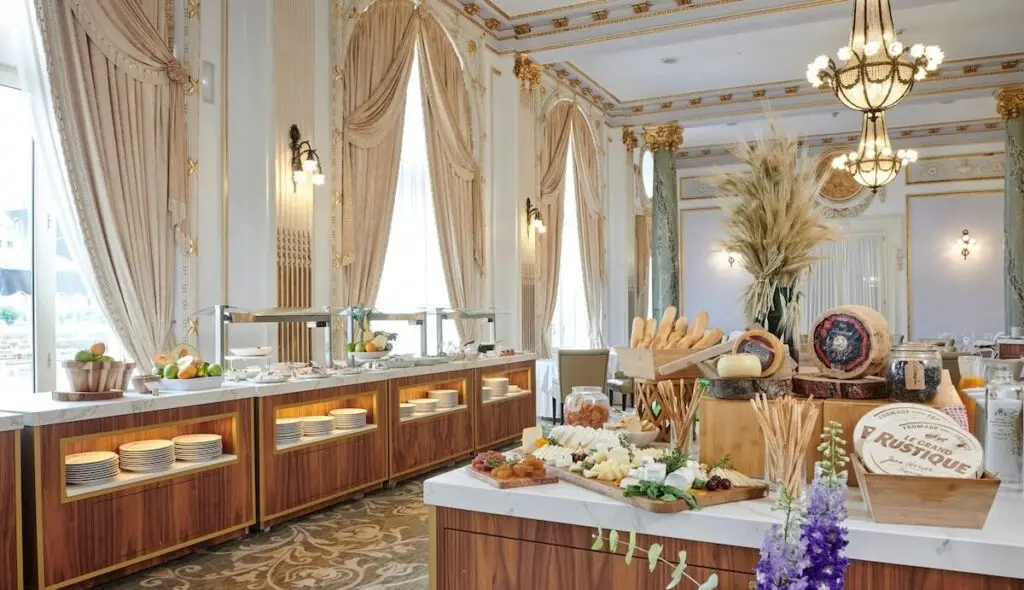
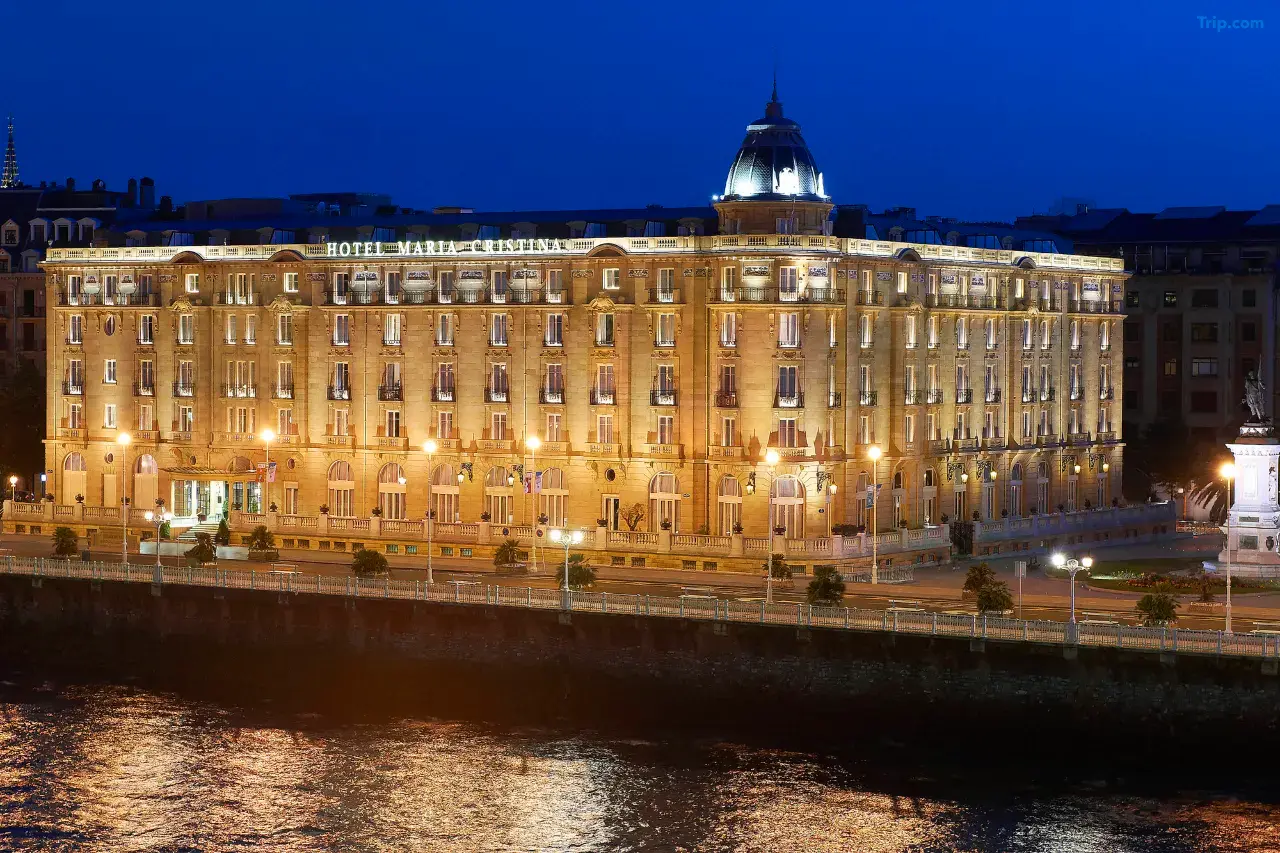
The epitome of Belle Époque elegance, this historic 5-star hotel has hosted royalty and movie stars since 1912. Overlooking the Urumea River and Victoria Eugenia Theatre, its location is unbeatable for exploring the Old Town and Kursaal. Rooms combine classic grandeur with modern luxury. Breakfast here is an unforgettable experience priced at around 48€ per person: served in a magnificent, high-ceilinged dining room, the lavish buffet features premium local products, freshly baked pastries, artisanal cheeses, cured meats, and warm dishes cooked to order alongside freshly squeezed juices. It is the ultimate choice for an indulgent, high-end stay. In the low season a double room without breakfast is around 420€ per night.
Hotel de Londres y de Inglaterra
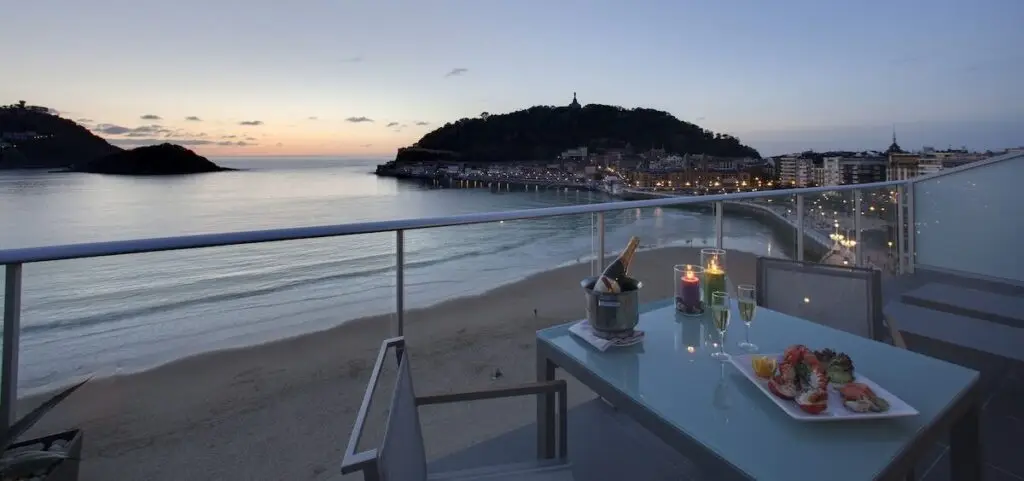
Positioned right on the iconic La Concha promenade, this 4-star boutique-style landmark offers unmatched panoramic ocean views. Housed in a 19th-century building, it places you steps away from both the beach and the bustling city center. Guests can start their day with a delightful breakfast buffet priced at approximately 36€ per person, served in a dining space overlooking the bay. In the low season a double room without breakfast is around 120€ per night.
Hotel Atari

Situated in the vibrant heart of the Old Town, Hotel Atari offers modern boutique luxury with an authentic local soul. It is perfect for food lovers looking to step straight out into the famous pintxo bars. The breakfast experience, priced at around 32€ per person, reflects the region’s rich gastronomic reputation: alongside fresh sourdough breads and hot dishes prepared on demand, the curated buffet includes iconic local pintxos and delicious Basque cheesecakes, letting you sample the best of Donostia flavors right from your morning table. In the low season a double room without breakfast is around 115€ per night.
Hotel Catalonia Donosti
Perched on the San Bartlomer hill, this stylish 4-star hotel seamlessly blends a historical 17th-century convent facade with sleek, contemporary interior design. Located just minutes from La Concha and the Good Shepherd Cathedral, it features a rooftop terrace with a pool and panoramic city vistas. Breakfast buffet is available for around 25€ per person and focuses on fresh, high-quality ingredients with live cooking stations for custom egg dishes, local cold cuts, fresh pastries, dietary-conscious options, and specialty coffees to energize your day. In the low season a double room without breakfast is around 130€ per night.
Room Mate Collection Gorka
Located on the bustling Plaza de Guipúzcoa, Room Mate Gorka combines sophisticated, warm design with an unbeatable central position between the Old Town and the shopping district. Breakfast is a highlight, priced at around 21€ per person and offered until late. The buffet presents a wholesome, traditional selection focusing on classic breakfast favorites, from artisan breads and fresh pastries to local cheeses, cold cuts, fresh juices, and hot dishes prepared to order. In the low season a double room without breakfast is around 100€ per night.
Sercotel Hotel Europa
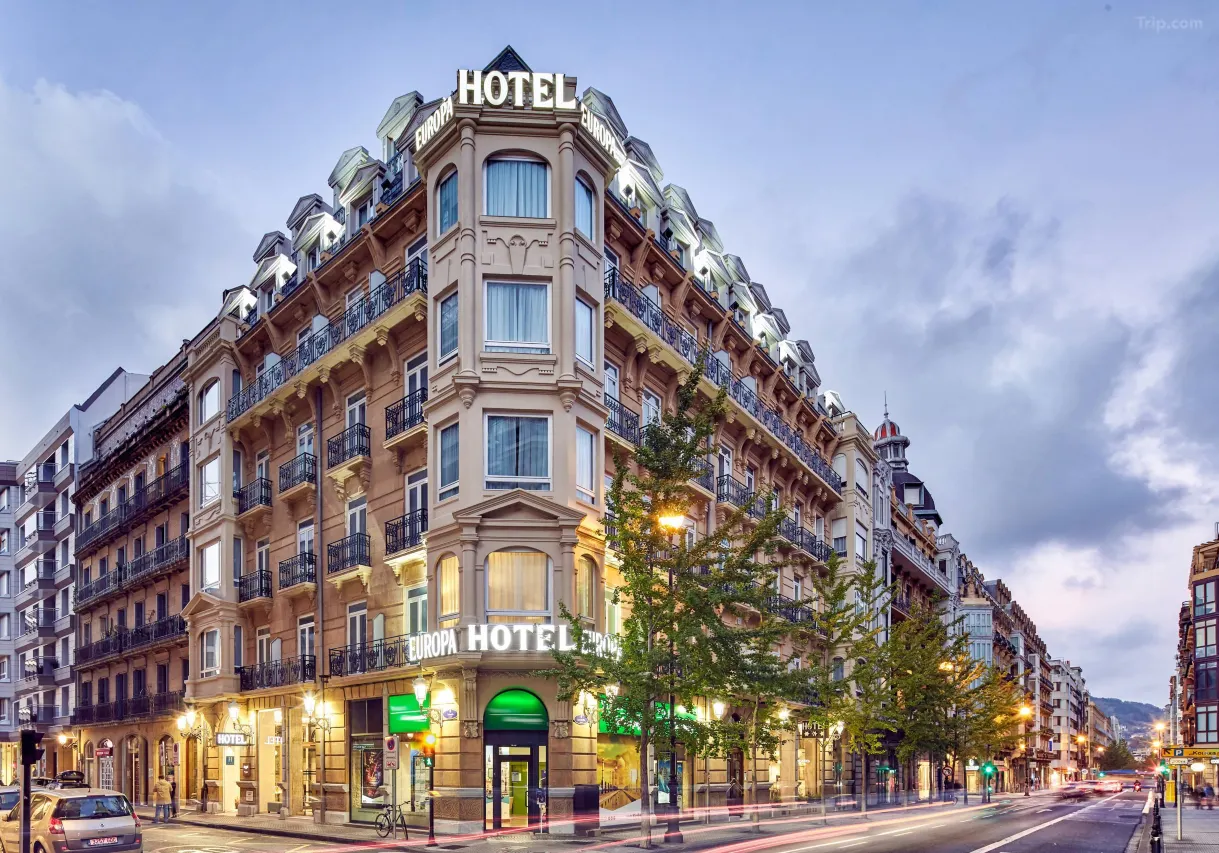
Housed in an elegant early 20th-century building in the Romantic Center, Sercotel Hotel Europa delivers exceptional value just one block from La Concha beach. Its classical architecture is complemented by functional, comfortable rooms, making it a reliable pick for travelers prioritizing location and budget. The daily breakfast buffet costs around 16€ per person and features a classic, traditional spread. In the low season a double room without breakfast is around 90€ per night.