Bilbao is a great destination for a short city break or as part of a longer holiday in the Basque Country. It is not a huge city — around 340,000 people live here — and that is actually one of its biggest advantages. Most of the places you will want to visit are within easy walking distance of each other, so you can spend your time exploring the city rather than sitting on buses or in taxis. From the Guggenheim and the riverfront to the Old Town, pintxos bars and lively shopping streets, there is plenty to see and do without ever feeling overwhelmed by the size of the city.
Bilbao is also a very pleasant city to explore on foot. The river runs right through the city, connecting many of its main sights, and you can easily combine museums, striking architecture, shopping, food and local history in the same day. For a short visit, this makes it easy to see a lot of Bilbao without having to rush from one place to another.
And if you don’t feel like walking, or you need to cross the city from one end to the other, Bilbao’s public transport makes things very easy. The Metro Bilbao and tram are particularly useful, and they are both inexpensive.
Table of Contents
- Day 1: Guggenheim, the river and the best views of Bilbao
- Day 2: Old Town, pintxos and the Bizkaia Bridge
- Is two days enough for Bilbao?
- Where to sleep in Bilbao?
A quick tip: get yourself a BARIK card
Before starting your sightseeing, there is one thing I strongly recommend: get a BARIK card.
You can buy one from the ticket machines at the Metro Bilbao stations. It costs very little, and you can load money onto it and use it to pay for public transport at discounted fares.
The really useful thing for visitors is that BARIK is not necessarily a personal card. A regular BARIK can be used by a group travelling together — up to 10 people — so you don’t necessarily need one card per person.
And it isn’t just useful on the Metro. BARIK works across a surprisingly large part of the transport network, including Metro Bilbao, the Bilbao tram (EuskoTran), EuskoTren, Renfe, Bilbobus and Bizkaibus. It can also be used on the Bizkaia Transporter Bridge, the Artxanda Funicular and the Portugalete boats.
In other words, if you are spending two days exploring Bilbao and its surroundings, it is one of those little practical things that makes life much easier.
Day 1: Guggenheim, the river and the best views of Bilbao
Morning: start at the Guggenheim
I would start your first morning at Bilbao’s most famous building: the Guggenheim Bilbao Museum.
Even if you are not particularly interested in modern art, you should visit. The building itself is one of the main attractions. Designed by Frank Gehry, its enormous curves and titanium surfaces have become the symbol of the new Bilbao.

And that is important because the Guggenheim is not simply another museum dropped into an existing city. When it opened in 1997, it became one of the most visible parts of Bilbao’s transformation from an industrial city dominated by shipyards, factories and port activity into the much more cultural and service-oriented city you see today.
Inside, you will find an important collection of modern and contemporary art, together with temporary exhibitions. The collection includes artists such as Mark Rothko, Jeff Koons, Richard Serra, Louise Bourgeois, Anish Kapoor, Eduardo Chillida and Anselm Kiefer.
There are also several works outside the building that have become Bilbao icons in their own right. The giant flower-covered Puppy by Jeff Koons is probably the most famous, while Louise Bourgeois’ enormous spider, Maman, is another of the museum’s instantly recognisable sights.
One of my favourite things about the Guggenheim is that the architecture and the art almost become one experience. Some works were actually conceived specifically for the museum’s unusual spaces.
Allow yourself at least two or three hours. You can rush through it, of course, but there is really no reason to do so on a two-day trip.
Have lunch at the Guggenheim
And this brings me to a little tip that can save you time: have lunch at the Bistró Guggenheim Bilbao, inside the museum.
The Bistró is a much more accessible option than going for a full gastronomic experience, and it makes perfect sense on a sightseeing day because you don’t have to leave the museum, find another restaurant and then walk back.
The food is modern Basque/international cuisine, with dishes such as marmitako, cod with pil-pil and other seasonal options. It feels considerably more special than an ordinary museum café, while remaining a much more casual option than the museum’s fine-dining restaurant, Nerua.
For me, it is exactly the sort of place that works well during a short city break: good food, a great location and, most importantly, no wasted time.
Afternoon: the river, Euskalduna and choose your own adventure
After lunch, leave the Guggenheim and start walking along the Nervión river, heading towards the Iberdrola Tower and eventually the Euskalduna Bridge.
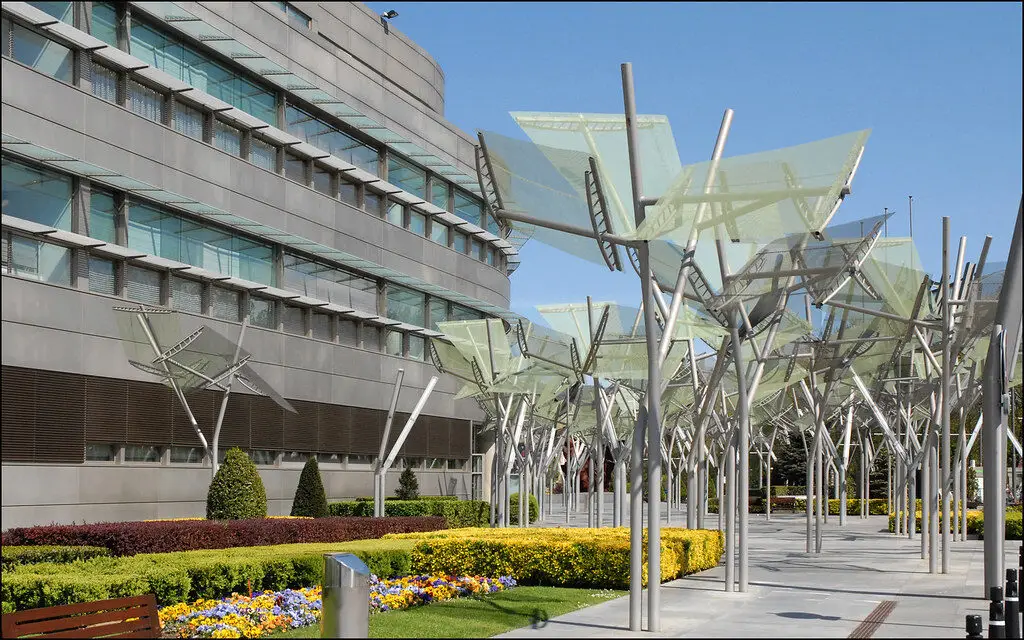
This is one of my favourite walks in Bilbao because it gives you a completely different perspective of the city. You are walking through the part of Bilbao that has undergone perhaps the most dramatic transformation.
Where there were once industrial facilities and port-related activity, you now have modern architecture, promenades, parks and cultural buildings.
As you walk, you will pass the enormous Iberdrola Tower, designed by César Pelli, and eventually reach the Euskalduna area.
Interested in Bilbao’s industrial and maritime past?
Then stop at Itsasmuseum Bilbao.
The museum is dedicated to Bilbao’s maritime history and is a particularly good choice if you want to understand what Bilbao was actually like before the Guggenheim era.

This is the Bilbao of ships, shipyards, fishing, trade and industry — the city that grew because of its river, the nearby iron sources and its port.
It is a useful complement to the Guggenheim because, together, the two places tell you something about Bilbao’s extraordinary change during the last few decades.
Or perhaps you are a football fan?
In that case, forget the museum and head for San Mamés, the home of Athletic Club.
Athletic is much more than just the football team in Bilbao, and San Mamés is known locally as La Catedral — the Cathedral of Football.
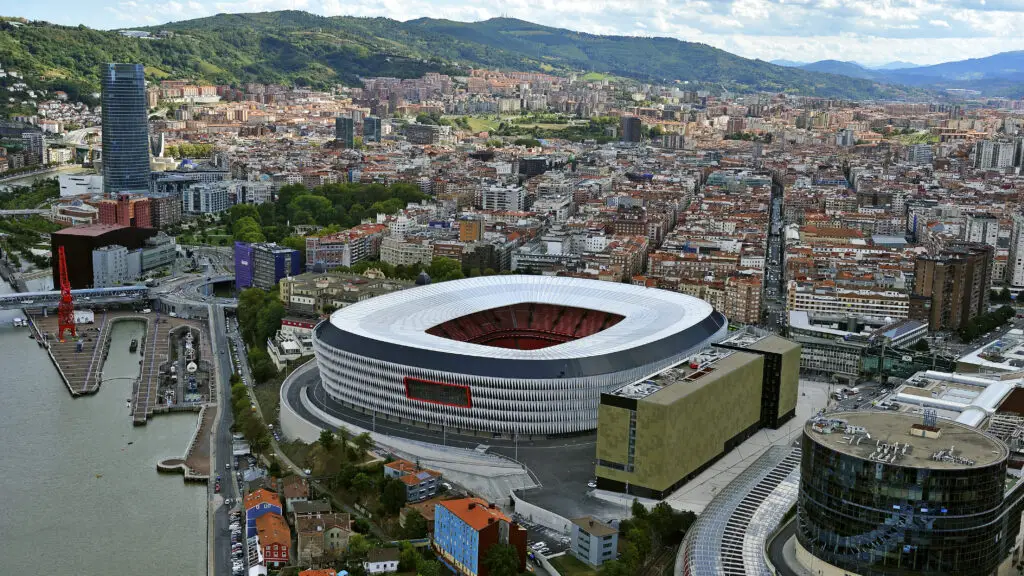
If you have the time, I would definitely do the San Mamés Tour and Athletic Club Museum. The tour takes you inside the stadium, including areas such as the dressing room and players’ tunnel, and allows you to step onto the pitch.
The museum contains more than 1,000 original objects and hundreds of videos covering the history of Athletic Club from its beginnings in 1898.
For football fans, this is one of those visits that can be considerably more interesting than you might expect.
Or perhaps you would rather go shopping?
No problem. Bilbao is also a very good shopping city.
From the Guggenheim, cross Doña Casilda Park and head towards the Zubiarte shopping centre. From there, continue towards Plaza Elíptica, also known as Plaza Moyua.
Then take your time walking along Gran Vía. This is the main shopping area of the Ensanche, and you will find most of the big international and Spanish fashion chains here.
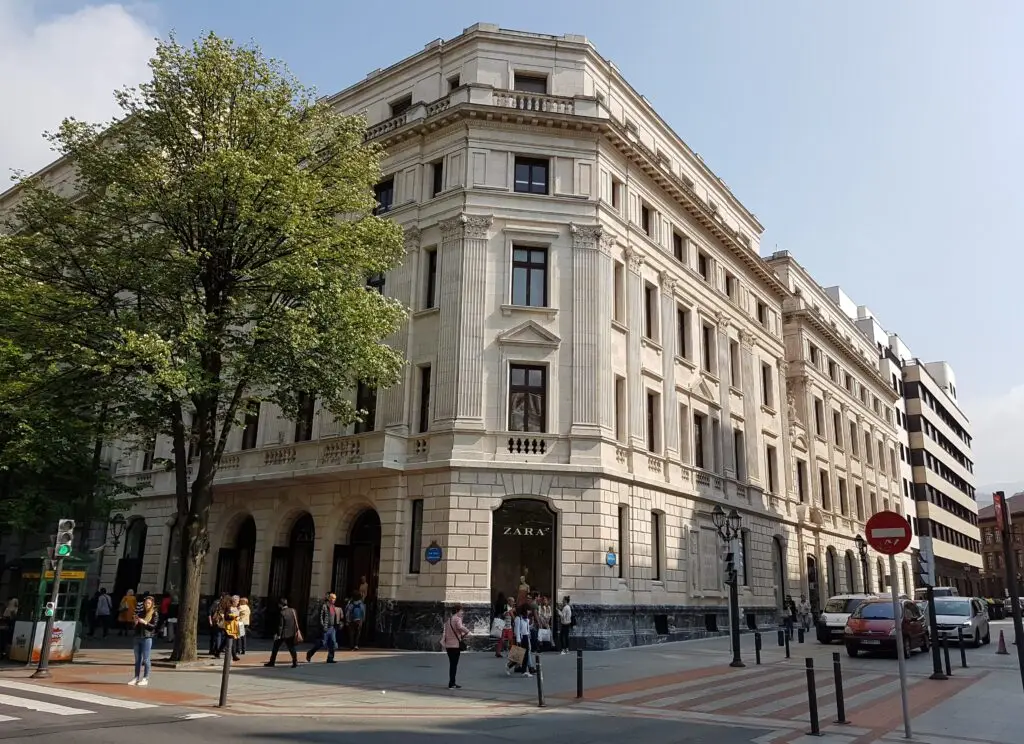
On this stretch of Gran Vía you can also stop at Pastelería Arrese. Buy some truffles or, even better, one of their chocolate palmeras. You are going to be eating quite a lot over these two days, so you might as well start early!
Sunset: go up Artxanda
As the afternoon turns into evening, cross the river using the spectacular Zubizuri Bridge.
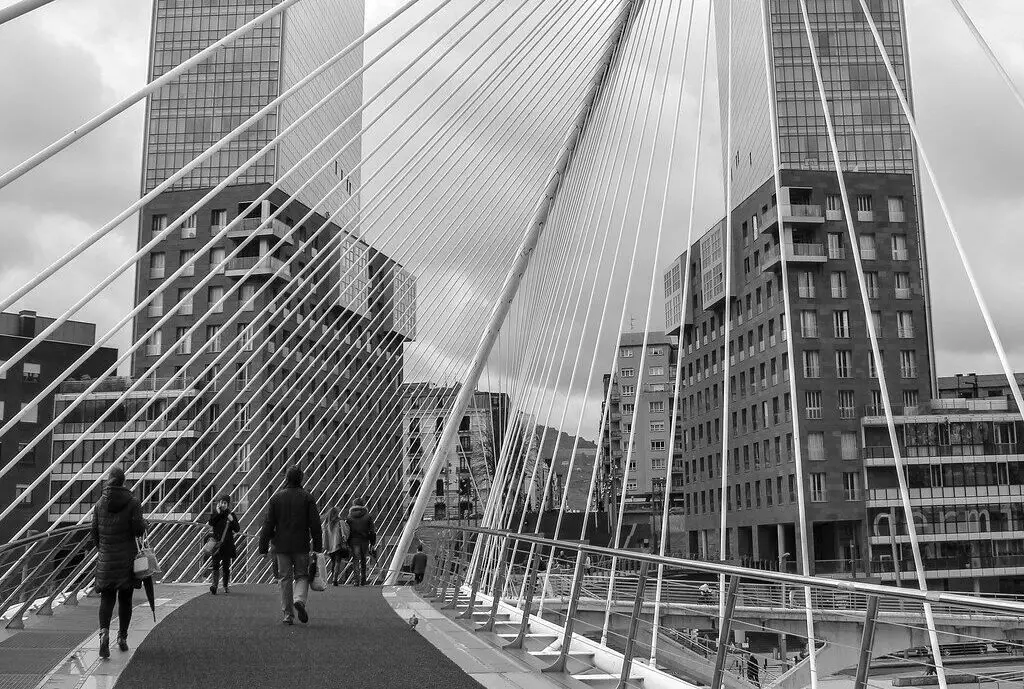
The bridge itself, designed by Santiago Calatrava, is worth seeing, but don’t spend too long here. Continue towards the Artxanda Funicular.
And here comes another excellent use for your BARIK card.
Take the funicular up to Artxanda and, if possible, time your visit for sunset.
The view from the top is one of the best ways to understand Bilbao. From up here you can see how the city is squeezed between green hills, with the river winding through the urban landscape.
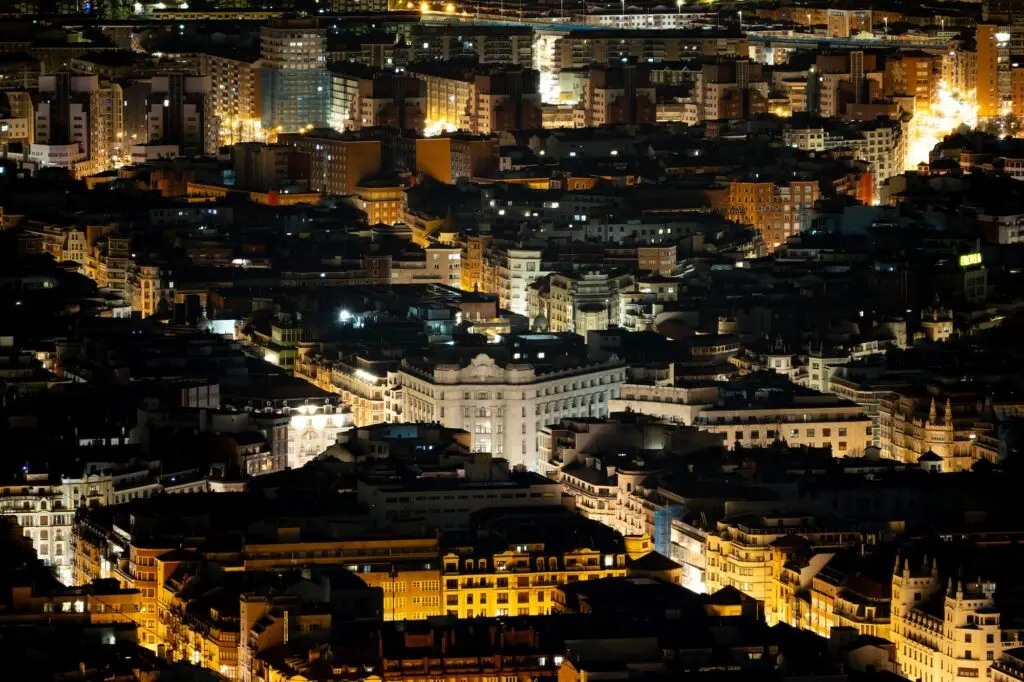
If you arrive after sunset, don’t worry. Bilbao at night is beautiful too, with the city lights spreading through the valley below you.
It is a completely different experience from seeing Bilbao from street level.
Dinner: pizza, because you deserve a break
After coming back down from Artxanda, I wouldn’t necessarily recommend another huge gastronomic meal.
After a day of museum, walking, football, shopping and sightseeing, sometimes what you actually want is a really good pizza. For that, consider places such as Demaio, Casa Leotta or Coppola.

They are good options for a relaxed Italian dinner and, after a day of Basque cuisine and local pastries, a change of style can be surprisingly welcome.
But don’t eat too mucha pizza! Save your appetite for tomorrow, you’re going to need it.
Day 2: the Old Town, pintxos and the Bizkaia Bridge
Morning: Mercado de la Ribera
Start your second day in the Casco Viejo, Bilbao’s Old Town.
But before getting lost among the Seven Streets, head first to the Mercado de la Ribera, right beside the river.
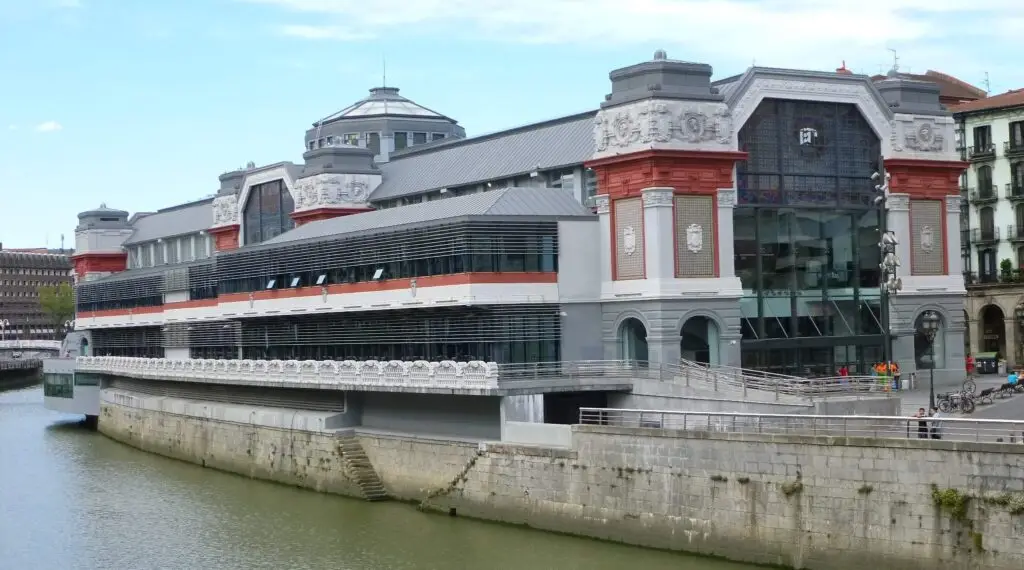
There has been a market on this site for centuries, with the history of the market going back to the Middle Ages. The spectacular building you see today dates from 1929 and was extensively refurbished after the devastating floods of 1983, and even more recently, between 2009 and 2010. At more than 10,000 square metres, it is enormous.
Inside you will find fresh fish and seafood, meat, fruit and vegetables, cheese, cured products, mushrooms and all sorts of ingredients that give you a good idea of what Basque cooking is based on.
Even if you aren’t planning to buy anything, it is worth walking around for a while.
Get lost in the Casco Viejo
From the market, simply start walking.
Bilbao’s Old Town is known as Zazpi Kaleak in basque or Siete Calles in spanish, which simply means the Seven Streets. These are Somera, Artekale, Tendería, Belostikale, Carnicería Vieja, Barrenkale and Barrenkale Barrena.

This is the oldest part of Bilbao and the original centre of the city. Bilbao was founded more than 700 years ago, and the original settlement developed around commerce, the river and the port. The old quarter was once enclosed by walls, and as the city expanded those walls disappeared and the famous Seven Streets developed.
Today, thankfully, you don’t need to worry about walls, medieval commerce or port traffic. The area is largely pedestrianised and packed with shops, cafés, bars and restaurants.
Take a look at the Plaza Nueva, walk past the Cathedral of Santiago and the Church of San Antón, and simply wander through the narrow streets.
This is one of those parts of Bilbao where I don’t recommend following a rigid route. Get lost for an hour. That’s the point.
If you are particularly interested in history, this is also a good moment to visit the Arkeologi Museoa. The museum covers the history and archaeology of Bizkaia from the earliest human occupation, more than 100,000 years ago, through prehistoric periods, Roman times and the Middle Ages.
If you would like to get a little more out of your visit to the Casco Viejo, the Bilbao Old Town Walking Tour is a two-hour small-group tour in English that takes you through the famous Siete Calles. Along the way, you’ll learn about Bilbao’s history, architecture, culture and, of course, its gastronomy. I think this is a particularly good option if it is your first visit to Bilbao and you want to understand the story behind the streets and buildings you are seeing rather than simply wandering around them.
Lunch: forget the restaurant and go for pintxos
For lunch, I would do something very simple: Don’t choose one restaurant. Choose several bars. Go for pintxos.
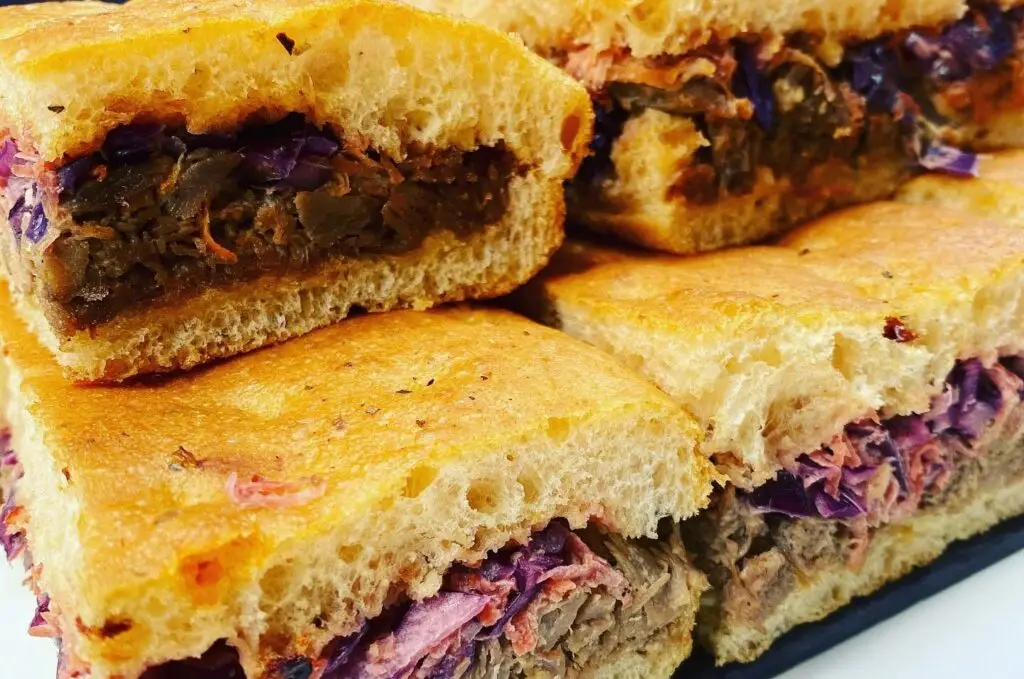
The beauty of pintxos is that you can try several completely different things instead of committing yourself to one big plate. Here are some places I particularly recommend:
- Motrikes is the place to go for their famous mushrooms.
- At Melilla y Fez, try the pinchos morunos.
- For variety, have a look at Guretoki, Charly and Sorginzulo. They all have plenty of options, and this is where you can start experimenting rather than ordering the same thing everywhere.
- And if you like Spanish omelette, don’t miss Baster.
My advice is not to eat too much in the first bar. Have one or two pintxos, move on, try something else, have another drink and continue. That’s half the fun.
And then comes dessert. Go to Gelati!! Gelati!! for an ice cream. The yoghurt, cream, cheesecake and Oreo flavours are particularly good. Yes, I know it sounds slightly ridiculous to recommend ice cream after a pintxos lunch, but you’re on holiday.
If you are not confident ordering in Spanish, or simply find it difficult to navigate a busy pintxos bar, I would recommend taking the Bilbao: Exclusive Food & Wine Tasting Tour. This three-hour tour takes you around the Casco Viejo with a local guide, stopping at hidden bars and local favourites for six tapas and four drinks, while sharing the stories and traditions that you might otherwise miss. Instead of trying to work out what to order while standing at a crowded counter, your guide takes care of everything and introduces you to the local food culture. You can simply relax, eat, drink and enjoy the experience — and, for a few hours, become part of the guide’s cuadrilla, the Basque word for a close-knit group of friends.
Afternoon: take the Metro to the coast
After lunch, head to the Casco Viejo Metro station, at Plaza Unamuno. Take the first train heading in the direction of Plentzia. And yes, you can use your BARIK card.
This is important: trains with destinations such as Plentzia, Larrabasterra, Ibarbengoa or Bidezabal can take you in the direction you need, so don’t panic if the destination on the front isn’t exactly what you expected.
Get off at Areeta.
Now you are leaving central Bilbao and entering Getxo, one of the most interesting parts of the Bilbao metropolitan area. Walk along Calle Mayor, the main commercial street of Areeta, towards the river.

You will pass several traditional pastry shops on the way. If you still have room after your morning ice cream — and I wouldn’t blame you — stop at Arrese or Zuricalday and try some of their pastries.
Eventually you will see it: the Bizkaia Bridge.
Cross the Bizkaia Bridge
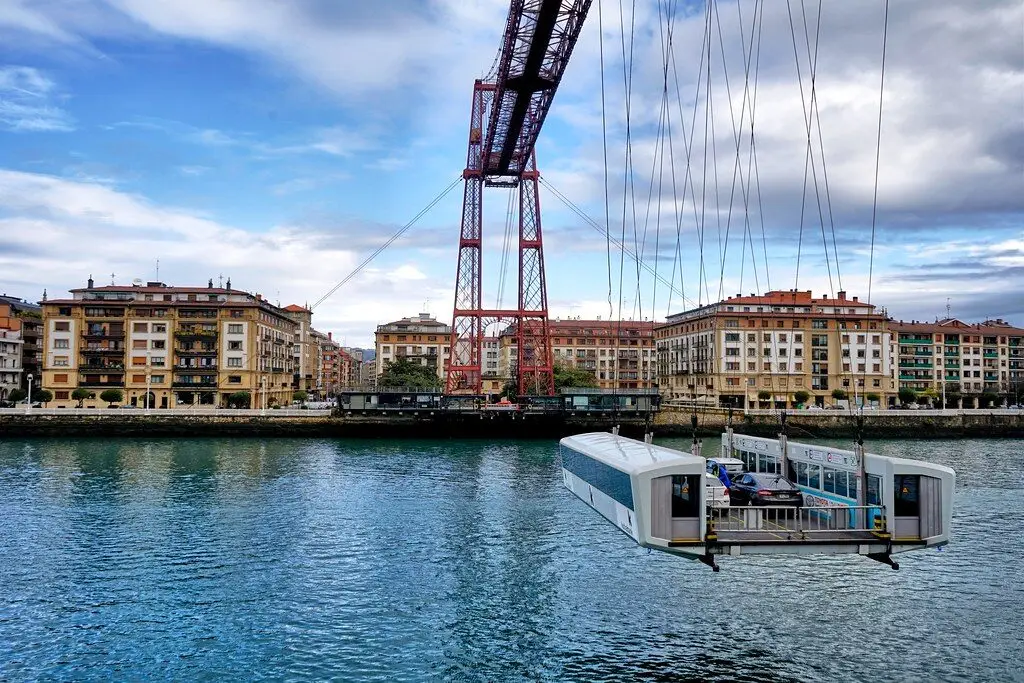
The Bizkaia Bridge, often called the Hanging Bridge or Puente Colgante, is one of the most spectacular pieces of industrial engineering in the Basque Country.
It was inaugurated in 1893 and connects Getxo and Portugalete across the Nervión estuary. It is also a UNESCO World Heritage Site.
Instead of crossing it like an ordinary bridge, take the transporter gondola underneath the enormous steel structure. And once again, your BARIK card comes in handy. Use it to cross the river.
The journey itself is short, but standing in the middle of the estuary while the huge steel structure towers above you is quite an experience.
Explore Portugalete
Once you arrive in Portugalete, don’t just turn around and immediately cross back. Walk into the old town.
Portugalete was founded in 1322 and its historic centre has a completely different character from Bilbao. The streets are narrow and, most importantly, very steep. Walk through streets such as Santa María, Medio and Fuente and make your way towards the Basilica of Santa María.
The old town is dominated by the basilica and the old Salazar tower-house, and the combination of narrow streets, old buildings and views towards the river makes this a surprisingly atmospheric little detour.
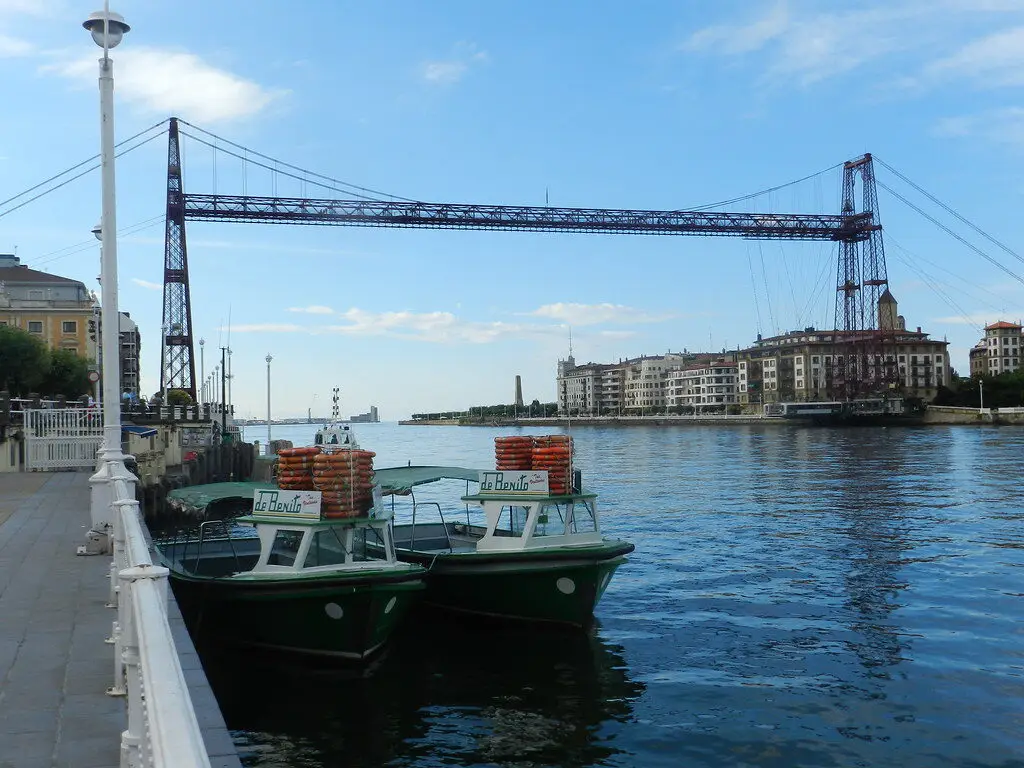
Eventually make your way down towards the river and the Paseo de La Canilla. From here you have another great view of the Bizkaia Bridge.
Then return to Areeta by crossing the bridge once again or taking a boat.
Walk along the waterfront in Areeta

Once back on the Getxo side, take a leisurely walk along the waterfront.
This is a completely different side of the Bilbao metropolitan area. You will see elegant old villas and large historic houses along the coast. In the summer it is also common to see large cruise ships docked in the port.
The contrast is fascinating: the same estuary that powered Bilbao’s industrial development also became home to some of the wealthiest families in Bizkaia.
Take your time here. After two busy days, this is a good moment simply to walk, look at the river and enjoy the architecture.
Back to Bilbao: one last stop
Eventually, take the Metro back to Bilbao.
If you still have energy, spend your final hour wandering through the Ensanche, the elegant nineteenth- and early twentieth-century extension of the city. And if you haven’t already visited it, make your way to Azkuna Zentroa – Alhóndiga Bilbao.

This building has a fascinating history. It was originally constructed in the early twentieth century as a huge warehouse for wine, oil and preserved foods. It later fell into disuse and was transformed into a cultural and leisure centre. The exterior retains the character of the original modernist building, while the interior was dramatically redesigned by Philippe Starck.
It is one of those places where I recommend simply walking inside and looking around. You don’t necessarily need to attend an event or spend hours there to appreciate it.
And before it’s too late, make sure to buy some of the city’s most traditional sweet treats to take home with you. Stop at one of the city’s classic pastry shops, such as Zuricalday, Arrese or La Suiza, and try some local favourites: the iconic Carolinas, the wonderfully soft Bollos de Mantequilla, or the delicious Pasteles de Arroz. These are genuine Bilbao classics and make a much tastier souvenir than a fridge magnet!

Your final Bilbao dinner
And finally, it is time for your last dinner.
If you want to finish the trip with a serious gastronomic experience, Bilbao has no shortage of Michelin-starred restaurants. Among the city’s options are Nerua Guggenheim Bilbao, Mina, Zarate, Etxanobe Atelier and Ola Martín Berasategui, among others.
This is definitely the moment to book in advance, particularly if your visit falls on a weekend.
But if tasting menus aren’t your thing, there is another option I personally like a lot: go for grilled meat. Try Amaren or Sugarra and order some good Basque beef cooked over the grill.
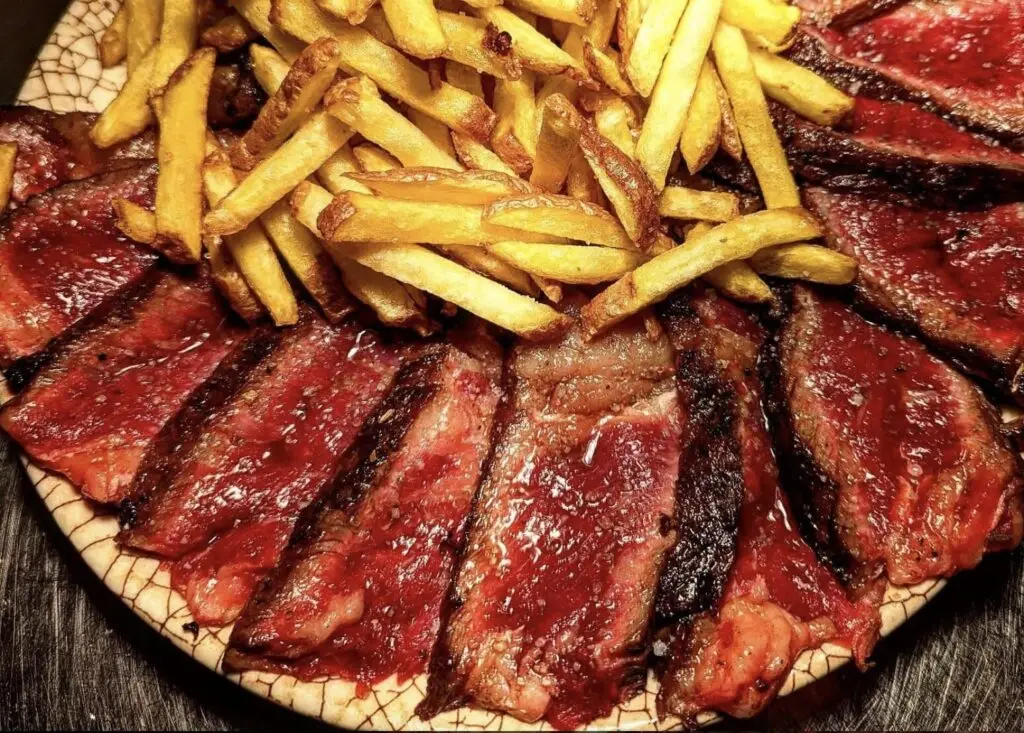
After two days of museums, architecture, history, pintxos, pastry, ice cream and walking, a great piece of grilled meat with a glass of wine is a pretty good way to finish a Bilbao weekend.
So, is two days enough for Bilbao?
Yes — although you’ll probably leave wanting more.
The great thing about Bilbao is that you can see a surprising amount in two days without feeling that you’ve spent the whole trip rushing between attractions.
Day one gives you the modern Bilbao: the Guggenheim, the regenerated riverfront, the Iberdrola Tower, San Mamés, shopping, Artxanda and the city at night.
Day two gives you the older and more traditional Bilbao: the Ribera Market, the Seven Streets, pintxos, the history of the city and then a trip down the estuary to the Bizkaia Bridge, Portugalete and Getxo.
And that’s really what makes Bilbao interesting to me.
It isn’t just one thing.
It is an old port city, an industrial city, a modern architectural showcase, a football city and, increasingly, a gastronomic destination. All of those different versions of Bilbao are still visible if you know where to look.
And the best part?
You can experience most of it on foot, with a BARIK card in your pocket for the moments when your feet finally tell you that enough is enough.
That’s my idea of a perfect two days in Bilbao.
Where to sleep in Bilbao?
Bilbao is a fairly compact city, with the Nervión River running right through it, so finding a well-located hotel is not particularly difficult. In general, any hotel reasonably close to the river will put you within easy reach of most of the city’s main sights. Rather than worrying too much about location, I would pay more attention to the price, the quality of the hotel and, perhaps most importantly, the breakfast.
Bilbao has a wide range of hotels, but these are some of our favourites, each offering something different in terms of location, character and experience:
Hotel LETOH Bilbao – One of our favourite options for staying in the Old Town. It is located right in the heart of Casco Viejo, making it an excellent base for exploring Bilbao on foot. The hotel lobby is also home to a Syra Coffee coffee shop, where you can enjoy high-quality speciality coffee — a nice bonus if, like us, you appreciate a good coffee in the morning. In the low season a standard double room without breakfast is around 80€ per night.
Hotel Carlton – Located in the heart of the Ensanche, right on Plaza Elíptica, the Carlton is one of Bilbao’s historic hotels and has been welcoming guests for more than a century. Its central location makes it convenient for exploring both the Ensanche and the Old Town, which is only a pleasant walk away. We particularly recommend its breakfast, which costs around 30€ and includes a good selection of local and traditional pastries. It is a great opportunity to try some of Bilbao’s classics, such as bollo de mantequilla, pastel de arroz and carolinas, among many others. In the low season a standard double room, without breakfast, is around 120€ per night.
The Artist Grand Hotel of Art – If your priority is location and views, this is hard to beat. Situated directly opposite the Guggenheim Museum, some of its rooms offer views of Frank Gehry’s iconic building. The hotel is also ideally placed for exploring the area around the museum, the river and the city centre. Its breakfast, at around 35€, is another highlight and offers a wide variety of high-quality products. In the low season a standard double bedroomroom, without breakfast and city views, is around 175€ per night. A room with Guggenheim views is just a little more, around 20€.
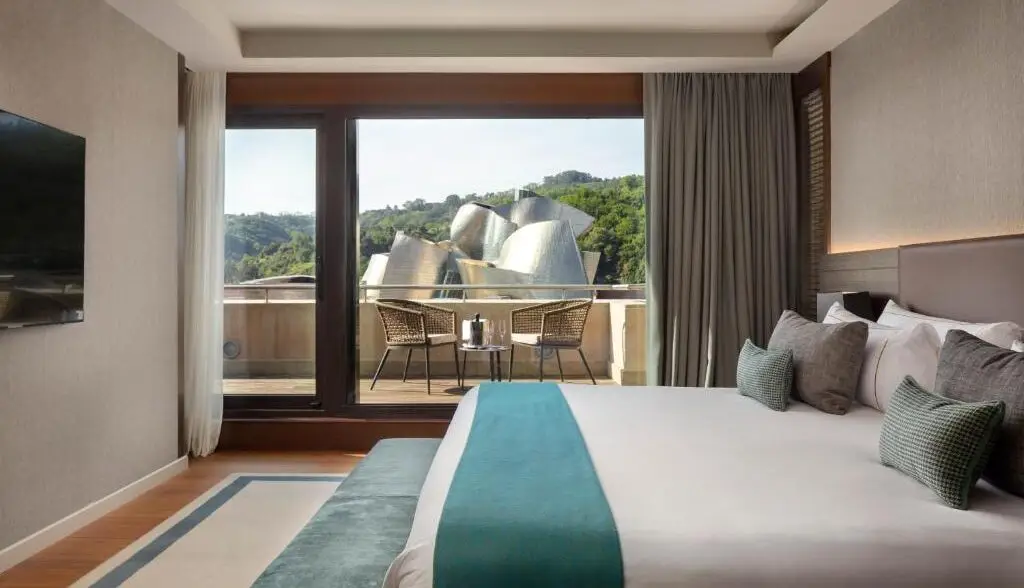
These three hotels are quite different from one another, but all have something special to offer. LETOH is our choice for experiencing the Old Town, the Carlton for historic character and traditional Bilbao, and The Artist for its unbeatable location next to the Guggenheim.


